




the client paid $10,000 and got a cron job. his ai writes and deploys meta descriptions every morning so he never touches another manual content brief. conversational ai development services, for a founder scaling revenue, don’t build a chatbot—they build a tireless operator.
your ai should be automating your sunday.
i see it in every founder we work with. you launched, you got a few customers, the revenue is coming in. and now you're stuck. you spend your time on manual seo updates, lead follow-up, customer support triage. the work that needs to *scale* is the work only you know how to do. you hear about conversational ai and think 'customer-facing chatbot.' but the real inefficiency is your own calendar.
what founders actually need from conversational ai development
you don’t need another chat window on your homepage. you need the internal operator you can’t afford to hire.
the traditional framing is a customer service bot. the founder framing is an internal growth agent. it’s the difference between a system that answers questions and a system that takes action. we built one for a b2b saas founder in norway—an autonomous lead scoring and outreach agent. it scrapes his target accounts, qualifies them against his ideal customer profile using grok fast for scoring, pulls context with grok, and sends a contextual dm with llama. the agent runs on a few hundred dollars a month.
he isn’t hiring a sales development representative. the ai is the sdr. conversational ai development services should make you, the founder, the bottleneck again for strategic decisions, not repetitive execution. it’s about integrating ai into your fragile operational stack so your revenue workflows survive your next growth spike.
your goal isn’t a demo. it’s a live, deployed, and measurable system that’s already working while you sleep.
the overwhelmed operator's ai moment: from manual seo to automated growth
you just spent sunday manually updating meta descriptions and schema markup again. your aeo pipeline is broken because you’re buried in lead follow-up.
this is the moment. you’re looking at your fundraising timeline or your next pilot customer deadline, and you realize you can’t scale your own output. you’ve seen ai promises, tried freelancers who vanished, or got quoted $100k minimum from an agency for a months-long project. you need a system that works today.
we took this pain point literally. for a us family office, we built an autonomous aeo content pipeline for $10,000+. it integrates ahrefs for keyword discovery and a youtube transcript analyzer as the ‘content brain.’ a cron job triggers every morning—it writes the article, formats the meta, generates schema, and deploys it. it’s a conversational ai system, just not a conversational interface. it’s an agent that holds a conversation *with your data sources* and executes a task.
the lesson is simple: conversational ai development services should target your biggest manual time sink. if you’re doing it manually every week, an agent can probably do it automatically every day.
what does a ‘revenue agent’ actually do?
it runs a business task end-to-end with context and execution. here's the anatomy:
scoring. it evaluates inbound leads or outbound prospects against your ideal customer profile. we use multiple models in a chain—grok fast for fast scoring, grok for deeper context pulls.
context retrieval. it fetches the latest data from your crm, your website, a linkedin profile—whatever it needs.
reasoning. it decides the next action. for a support ticket, this might be escalation. for a lead, this is a personalized outreach dm.
execution. it takes the action. it sends the email, posts the message, creates the ticket in your helpdesk, or writes and deploys the blog post.
this moves beyond retrieval-augmented generation. this is rag + reasoning + execution. it eliminates the human hand-off.
how dreamlaunch builds ai agents that run your business (not just chat)
we don’t start with a library of llm models. we start with your last sunday night. what did you hate doing?
our build process is engineered to get a live agent in front of your actual data as fast as possible. it follows the same sprint structure we use for products like mosaic or bounce: map, build, deploy, measure.
map the manual workflow. we document the exact steps you take, the tools you touch, the decisions you make. we find the single highest-friction loop. for a lead follow-up agent, that’s: see a new signup in stripe, check their website, decide if they’re icp, draft a personal dm, send it.
build the deterministic agent. we don’t let the ai ‘freestyle.’ we structure the reasoning. we use a framework of guardrails, confidence scoring, and explicit fallback paths. this is what makes it dependable. it’s the difference between a demo that works 80% of the time and a production system that works 99%.
deploy to your actual environment. the agent lives in your slack, your discord, or as a background job in your infrastructure. we use tools like model context protocol for controlled tool access and server-sent events for live streaming of its actions so you can watch it work.
measure the time saved, not the chats handled. the core metric is founder-hours-reclaimed-per-week. for the aeo pipeline client, that’s 10+ hours per week, forever.
why build this way? the speed trap
a generic ai development shop will offer you a scoping call, then a months-long project. you get a ‘solution’ that’s already outdated by launch. the landscape moves too fast. llama 3.1 is out, then claude 3.5, then something new.
we anchor on workflow first, model second. we build the deterministic orchestration layer—the scoring, routing, and execution logic—so you can swap the underlying llm when a better one drops. this is how we shipped a fintech mvp for $6,500 in under 48 hours: by fixing the workflow before writing a line of code.
the ai reliability audit exists to find this workflow before you spend a dollar.
the ai reliability audit: your free first step to a working system
you don’t need a $20,000 proposal. you need to know which of your manual tasks is most automatable, today, with current ai.
this is why we built the ai reliability audit as the only entry point. it’s a fixed-scope, 60-minute deep dive into one specific, painful manual process in your business. we don’t talk high-level strategy. we get screen-sharing, look at your actual tools, and map the workflow from trigger to completion.
by the end of the call, you walk away with:
- a clearly defined ‘agent-able’ task that can be automated.
- a blueprint of the architecture needed, including the integration points.
- a firm, fixed-scope price for building and deploying it.
a recent audit for a founder drowning in customer support triage led to a $3,500 build that now auto-sorts 80% of incoming tickets and escalates the rest with full context to his team. he got a launch sprint proposal immediately after the audit.
the audit itself is free because the biggest risk for a founder isn’t the cost—it’s the time spent on another project that doesn’t ship. we de-risk the conversation before the conversation starts.
beyond the chatbot: real integrations for revenue and support workflows
your agent is only as useful as the tools it can use.
a chatbot that only reads a knowledge base is a fancy faq. an agent that can update a stripe subscription, create a linear ticket, post a personalized welcome dm in discord, and log the activity to a google sheet is an operator. we prioritize ‘api-all-the-way-down’ integrations.
some of the most powerful agent builds are the quiet ones. they never talk to a customer:
- autonomous aeo pipeline: ahrefs → notion (brief) → openai (write) → vercel/deploy.
- lead scoring & outreach agent: stripe/paddle (signup) → puppeteer (website scan) → grok fast (score) → grok (context) → llama (dm) → linkedin/slack api.
- support ticket triage agent: discord/slack (message) → gpt-4 (classify) → linear (create ticket with severity) → zapier (alert human).
these are conversational ai development services in their purest form. they’re multi-turn systems that converse with apis, make decisions, and take action. like the simulation engine mobile app we built for an sf founder—40+ screens mapped before a line of code was written—the value is in the rigorous workflow design, not the model choice.
why a fixed-scope ai build beats hourly agencies for founders
hourly billing incentivizes the wrong thing: more hours.
when you’re a founder holding a timeline, you need predictability. you need to know the cost, the outcome, and the ship date. the $17,500 build for the simulation engine app was a fixed-scope project. we defined the 40+ screens, the state flows, the integrations. there was no scope creep because the scope was the deliverable.
contrast that with the burnout project: the client who came to us after 6 months and $40,000 spent with an agency on an ai-generated codebase. it was 400+ files of unsustainable chaos—hardcoded api keys, parallel auth systems, hallucinated npm packages. we did a vibe-coded audit and a $3,500 cleanup to make it shippable. hourly agencies rarely have the incentive to say ‘this is done.’
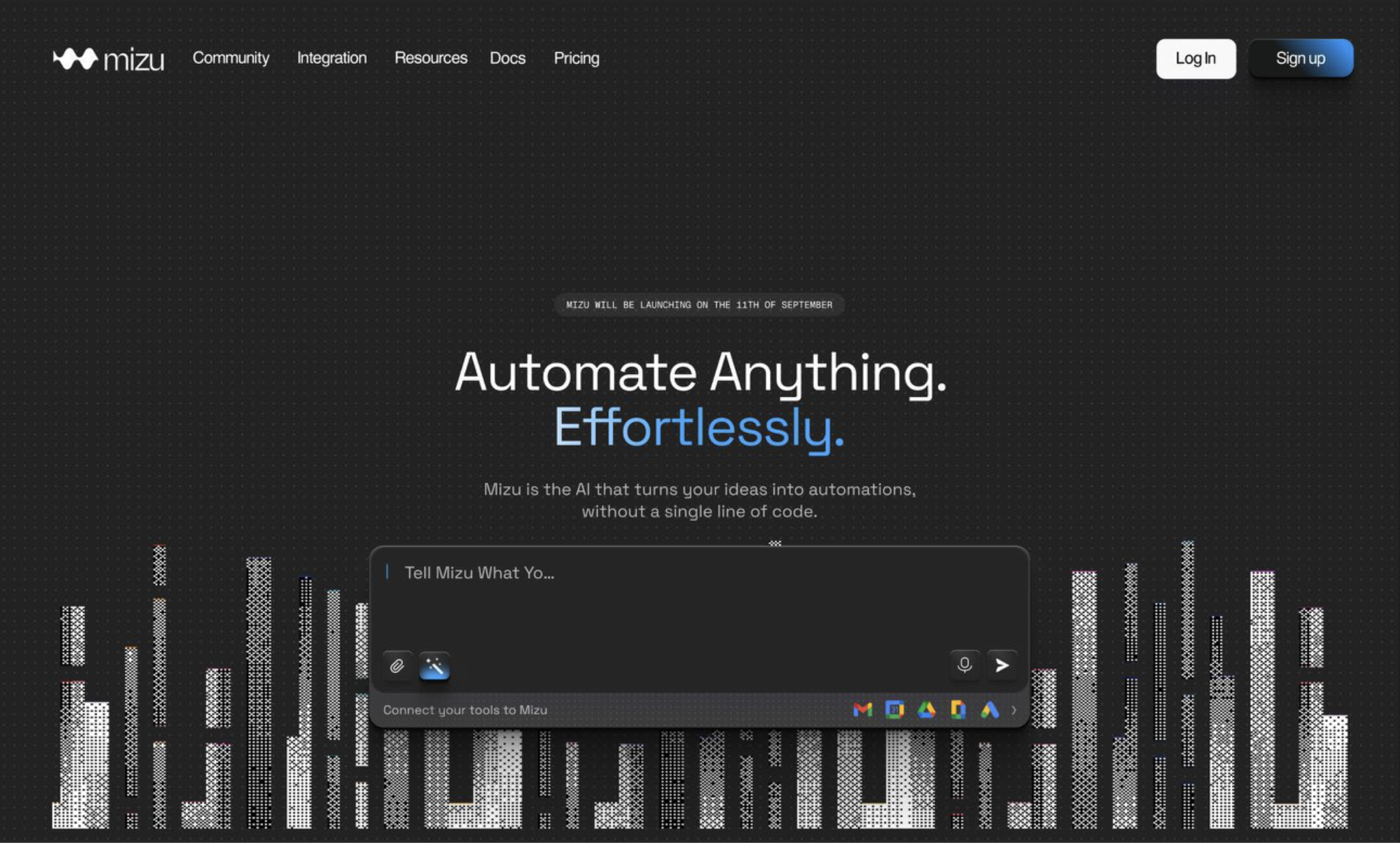
a fixed-scope ai build from dreamlaunch is a line in the sand. it says: this is the exact agent we will build, these are the tools it will use, this is the metric it will impact, and this is the date it will be live in your environment. like the mizu ai build for andrej, the goal is a ‘solid foundation i can actually scale from’—not an open-ended research project.
the lesson is locked in the showcase. the projects that shipped fastest had the tightest, most painful problem defined from minute one.
is this just for tech startups?
no. the overwhelmed operator is a persona, not an industry. we’ve built revenue agents for real estate, professional services, and consumer apps. the pattern is universal: a founder who is the bottleneck for a repetitive, high-value workflow. the vertical doesn’t matter if the pain is specific.
the photographer booking platform poc failed because the core unit economics were broken—photographers moved off-platform once direct relationships formed. the ai couldn’t fix a flawed business model. but an agent that automates a photographer's client onboarding and contract signing? that’s a painkiller.
conversational ai development services work when they target a painkiller workflow. you know it’s a painkiller if stopping the manual task would directly slow your revenue growth.
so. which manual task is stealing your next fundraising window?
if you’re spending hours every week on something a scripted agent could do, let’s diagnose it. book your free ai reliability audit. we’ll map one painful workflow, show you exactly how to automate it, and give you a fixed price to build it. no scoping calls, no open-ended proposals—just a clear path to a system that works by next sunday.