




search "chatbot development services" and eighteen of the twenty results are agency pages (EffectiveSoft, Appinventiv, Itransition, InvoZone, SoftTeco, and a dozen more) pitching the same capability list: nlp, rag, multi-channel. none of them explain what the service actually involves, who does this work at what scale, or how to tell whether a vendor's bot will hold up once it's live.
Short answer: chatbot development services means scoping a bot to a specific business task, grounding it in real, current data, building the conversation and integration logic, and testing it against messy real inputs before launch, then maintaining it as the business's data changes. a templated, single-purpose bot runs $500-$1,200 to build per a documented small-business build, while custom agency builds run considerably higher, this term's $86.66 average cost-per-click, the highest of any query in this category, confirms that's where the real buyer demand sits.
what you'll learn
- what chatbot development actually is, and what the real build process looks like for a business
- a real case study of a company that implemented one, and what changed
- who does this work at what scale, from global consultancies to solo freelance builders
- exactly what to vet before hiring a vendor, and what to test before you sign off
what is chatbot development?
chatbot development is building a system that holds a conversation with a customer or employee and completes a specific task inside that conversation, answering a question, booking something, qualifying a lead, or escalating to a human when it hits its limit. that spans a wide range of real, distinct products: a rules-based bot matching keywords to canned answers, an LLM-backed assistant that reasons about context, a support bot wired into a helpdesk and CRM. all of them get called "a chatbot," and all of them require meaningfully different amounts of engineering.
what does implementing a chatbot actually look like for a business?
a boutique clothing store owner described the problem in her own words before ever mentioning "chatbot": "every time i do a drop, the dms flood in and it's the same questions over and over. is this in stock? what sizes are left? how much? do you ship here? when's the next restock? i spend most of my day answering the same stuff." (source: r/ecommerce) that's the actual starting point for almost every real chatbot build: not "we want ai," but a specific, repetitive, named task eating someone's day.
the implementation itself runs in a consistent sequence regardless of vendor size:
- scope the exact questions it needs to answer. the same ecommerce thread produced the right instinct: "the safe first version is usually stock and size availability, shipping zones, return and exchange basics, restock timing if you actually have that data, collecting the order number or email before handing off."
- ground it in a real source of truth, not a stale FAQ. "if it is guessing inventory from old faqs, it will create more support work than it saves."
- design the handoff before launch, not after a complaint. anything ambiguous, "can you hold this item," "can i change my order," should either trigger a follow-up question or route straight to a person.
- test against real, messy input before it goes live. "i'd test with 30-50 real dms from your last drop before committing. include the messy ones: typos, people asking about multiple products, sold-out items, international shipping, and angry 'why has this not shipped?' messages."
Source: r/ecommerce, verified 2026-09-23.
a real case study: the Walton Centre, a UK neurology NHS trust, worked with Tata Consultancy Services (TCS) to build a conversational chatbot specifically to reduce the strain on staff answering repetitive migraine-management questions from patients. the shape is identical to the boutique example above, a specific, repetitive, named task, just at enterprise/healthcare scale with the compliance and data-handling requirements that come with it.
who actually builds chatbots, at what scale?
global consultancies and enterprise platforms
large systems integrators build chatbots as part of broader digital transformation work, wired into existing CRM, contact center, and compliance infrastructure. this tier fits an organization that needs the bot governed alongside existing enterprise systems and compliance requirements, and prices accordingly, usually well into six figures for a full deployment.
| Company | Best for | Pricing signal | Differentiator |
|---|---|---|---|
| Regulated/healthcare-grade conversational builds | Not published; scoped as part of a broader SI engagement | Real, named deployment: the Walton Centre NHS migraine chatbot | |
| Platform underpinning enterprise deployments via IBM Consulting or a partner | Not published; six-figure-plus for a full deployment | watsonx Orchestrate is the current successor to watsonx Assistant |
mid-size dev agencies
the eighteen agency pages actually ranking for "chatbot development services" are real, mid-size custom dev shops building bespoke conversational products for businesses that need more than a template but don't need enterprise-grade governance. none of them publish pricing publicly, which is exactly why this term carries an $86.66 average cost-per-click, buyers are searching for a number these pages won't give them.
| Company | Best for | Pricing signal | Differentiator |
|---|---|---|---|
| Custom AI chatbot development | Not published on site | Currently ranking #2 organically for this exact search | |
| AI chatbot development services | Not published on site | Currently ranking #3 organically for this exact search | |
| AI chatbot development company | Not published on site | Currently ranking #5 organically for this exact search |
independent builders and freelance operators
a real, well-documented segment of this market is solo developers building templated bots directly for local and small businesses, that's a real, legitimate purchase for a single storefront or local business, just a different scope than the two tiers above. DreamLaunch's own work sits closest to this tier in scope, but built to production standard rather than templated.
| Operator | Best for | Pricing signal | Differentiator |
|---|---|---|---|
| Typical solo/freelance builder | One templated FAQ/booking bot for one storefront | $500-$1,200 setup + $150-$300/mo, ~$3-$10/mo in API cost | Fastest and cheapest path for a single, simple use case |
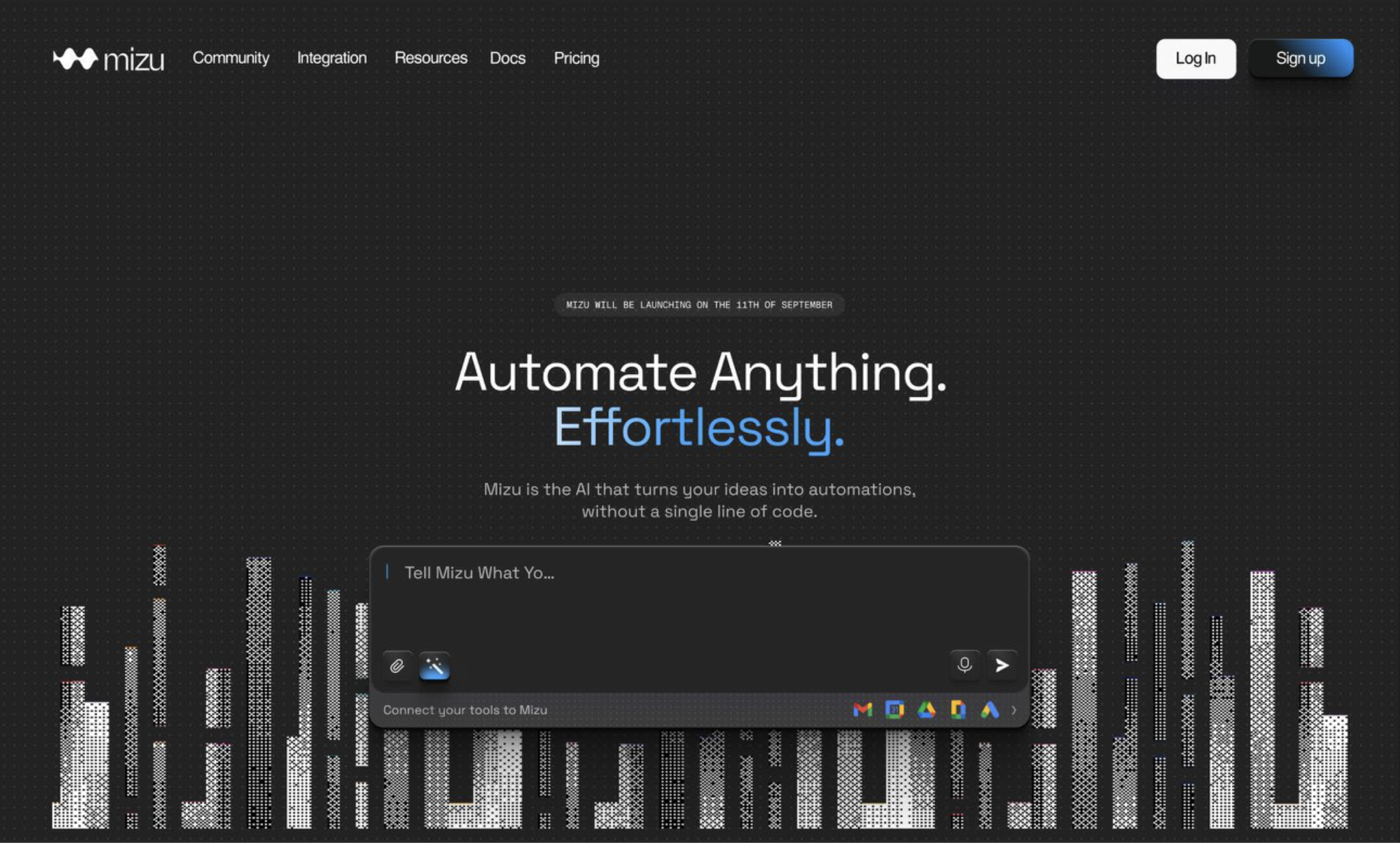
| A chatbot built as part of a real product, grounded in real data, owned outright | Scoped per project, see pricing | Production-standard build, not a templated widget (see Mizu AI) |
an honest disclosure: if what you need is a $500-$1,200 templated FAQ bot for one storefront, an independent builder working that market directly is the cheaper, more honest fit, not DreamLaunch. DreamLaunch fits when the chatbot is part of a real product, needs to be grounded in your own data with a real escalation path, and needs to be owned outright. AI agents & copilots is the relevant service for that scope.
how do you vet a chatbot vendor?
the clearest description of what actually goes wrong comes from someone who's watched it happen from the customer side: "a customer-service ai can understand the complaint, quote the right policy, and still leave the customer with exactly the same problem. authority should be bounded, not unlimited. a good escalation moves the case forward, a bad one resets the customer." (source: r/AI_Agents) another commenter on the same thread described exactly what that failure feels like from the customer's side: "nothing more infuriating than spending 20 minutes with an ai, explaining everything, then getting a human who asks 'so what's the issue' like you just walked in the door." (source: r/AI_Agents)
before hiring, ask directly:
- what happens when it doesn't know the answer? a good escalation hands the conversation to a human with the full context attached. a bad one resets the customer to zero.
- what is it actually grounded in? ask specifically whether it's reading live inventory/policy data or a static document that goes stale the first time a price changes.
- is this the right problem to automate? per a developer who's built these professionally: "for simple faq or lead capture stuff, usually not worth building custom anymore... real roi shows up only when it's tied to a high-volume repetitive pain like support tickets, internal knowledge search, or qualified inbound leads. most people overestimate the impact and underestimate the maintenance." (source: r/hireaideveloper)
what should you test before signing off on a chatbot build?
never sign off on a clean demo script alone. run it against messy, real inputs first: typos, multiple products in one message, sold-out or edge-case scenarios, and at least one genuinely angry message. the standard worth borrowing directly: "test with 30-50 real dms from your last drop before committing. include the messy ones." if the vendor can't or won't run that test before you pay the final invoice, that's a real signal on its own, not proof of bad work, but a reason to ask more directly before committing.
TLDR
- What it is: scoping, grounding, building, and testing a conversational system against real business data, not a generic capability demo.
- The market: global consultancies and platforms (TCS, IBM watsonx) for enterprise governance, mid-size dev shops (EffectiveSoft, Appinventiv, Itransition) for custom builds, independent builders (DreamLaunch included) for scoped, owned products.
- What it costs: $500-$1,200 for a templated bot, considerably more for a custom agency build, no independent public source verifies a specific enterprise figure so treat the templated price as your reference floor.
- How to vet: ask what happens when it doesn't know the answer, what it's grounded in, and whether this task actually needs a custom build. test against 30-50 real, messy messages before signing off.