
Product Design · Frontend · Backend · Full-Stack Build
Mizu AI: Shipping an AI-Native Automation Builder in 6 Weeks
Andrej had an idea and nothing else: no product, no frontend, no backend, no team. He wanted to build an AI automation builder anyone could use, describe what you need in plain English, and it builds the automation for you, in a category already led by well-funded players like Lindy.
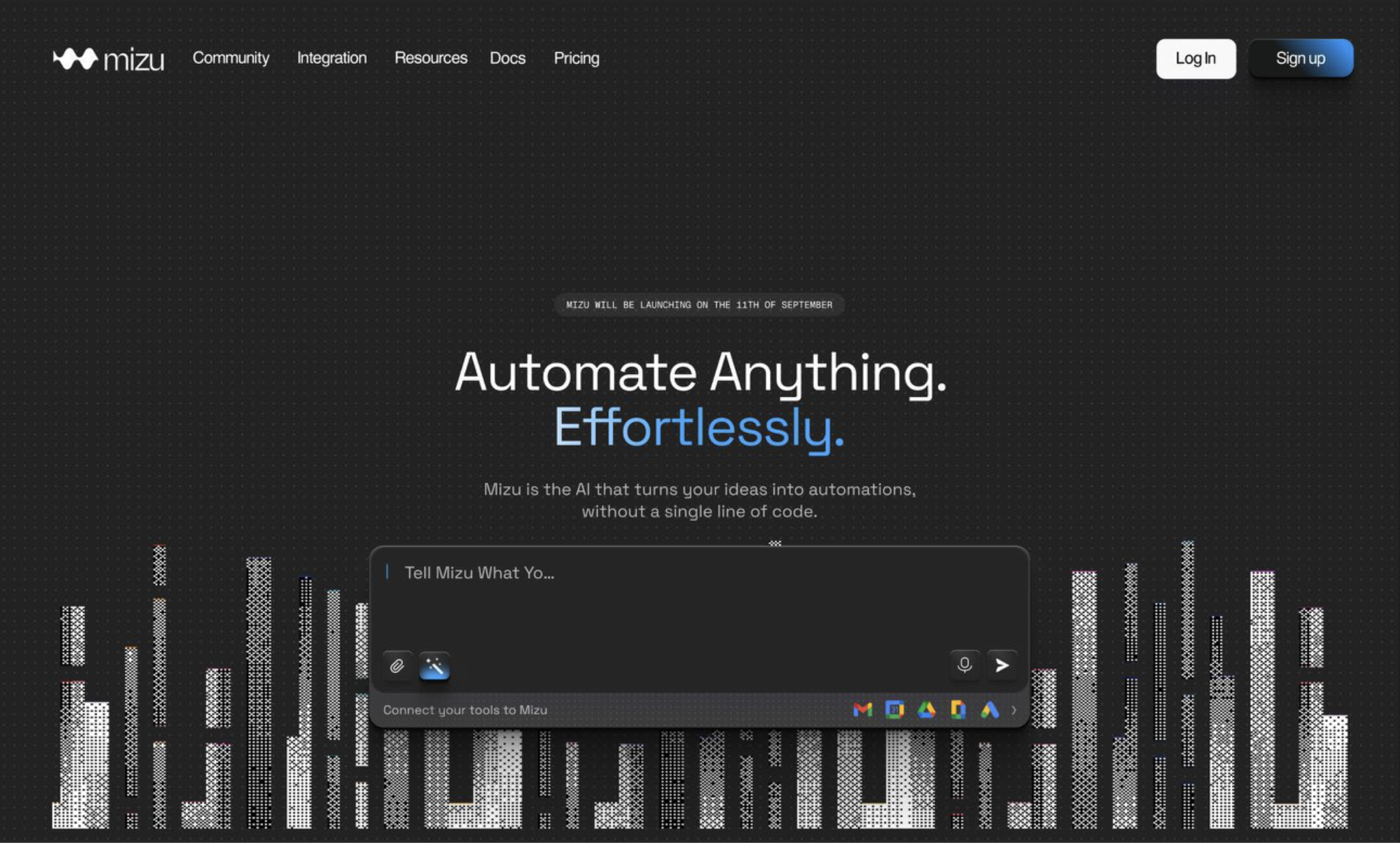
Overview
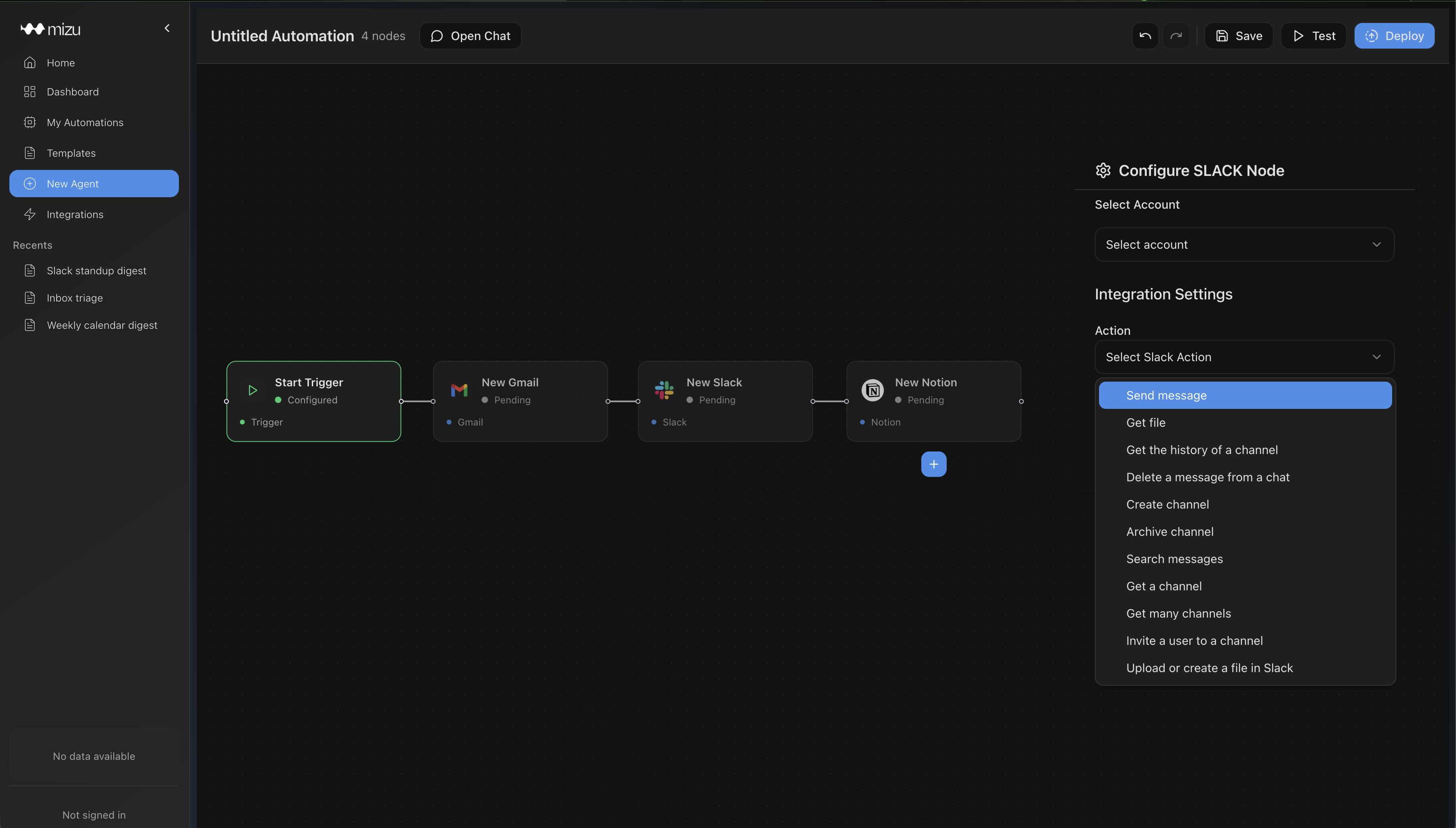
We built it with him, design and engineering together, from the first sketch to a working product: auth, onboarding, an AI-powered builder, a visual canvas, five real integrations, and billing. All of it live in six weeks.
The challenge
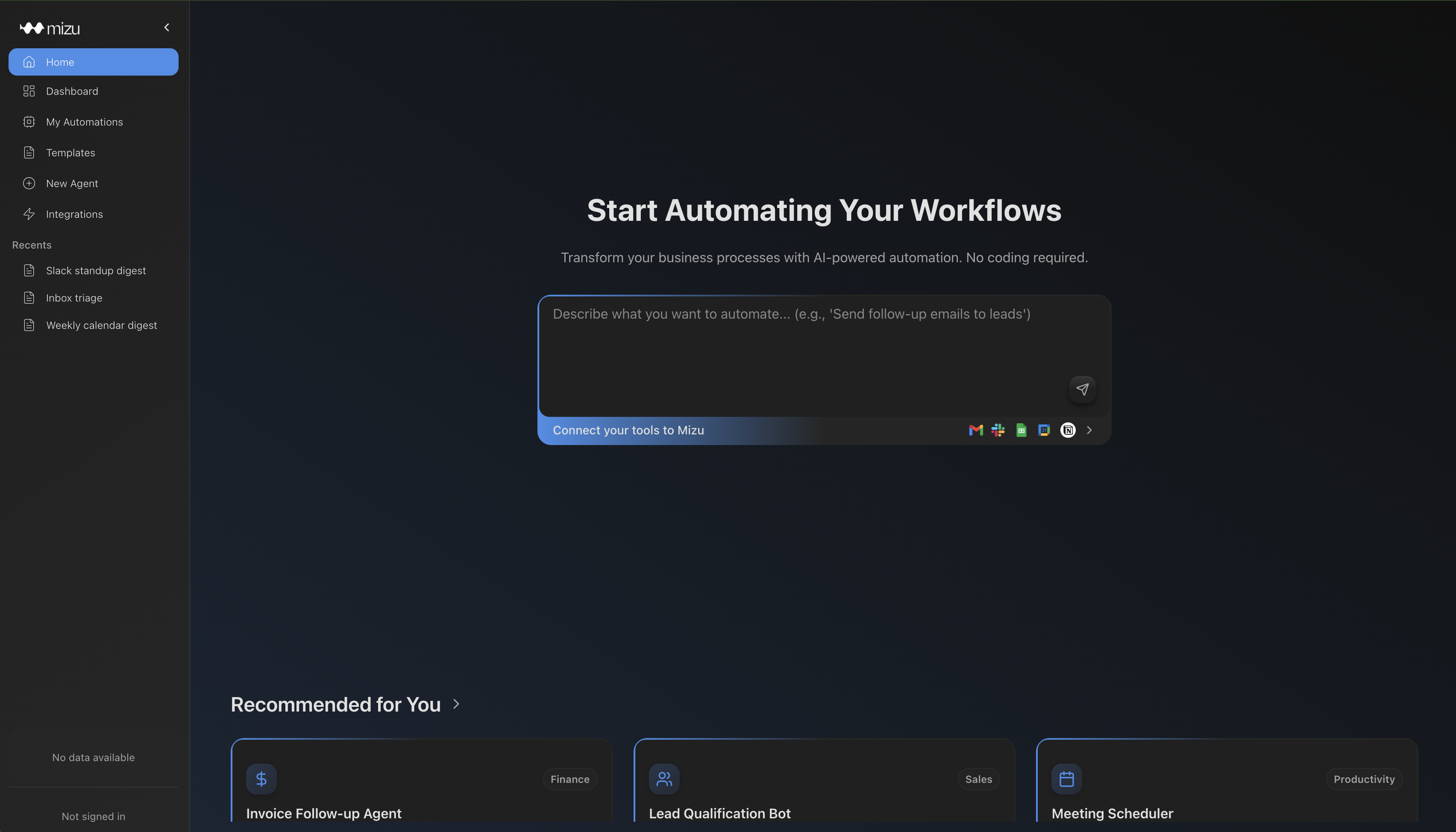
The hard part wasn't the automation logic. It was making all of that invisible. A user should be able to type 'send me a Slack message every time I get a new lead' and just watch it work, never seeing the credential handling, the account setup, or the billing rules making that possible underneath.
And Andrej didn't have six months to get there. He had six weeks, a category full of funded competitors, and a bar that wasn't 'does it work,' it was 'does it feel effortless.'
Our approach
We started with the experience, not the screens: how does someone's plain-English request actually turn into a working automation? How does that automation become something they can see and trust, instead of a black box? We mapped that journey before building anything.
Design and engineering moved together the whole way through, not design-then-handoff. That's the only way a product this complex ships as one coherent thing in six weeks, instead of a UI bolted onto a backend built after the fact.
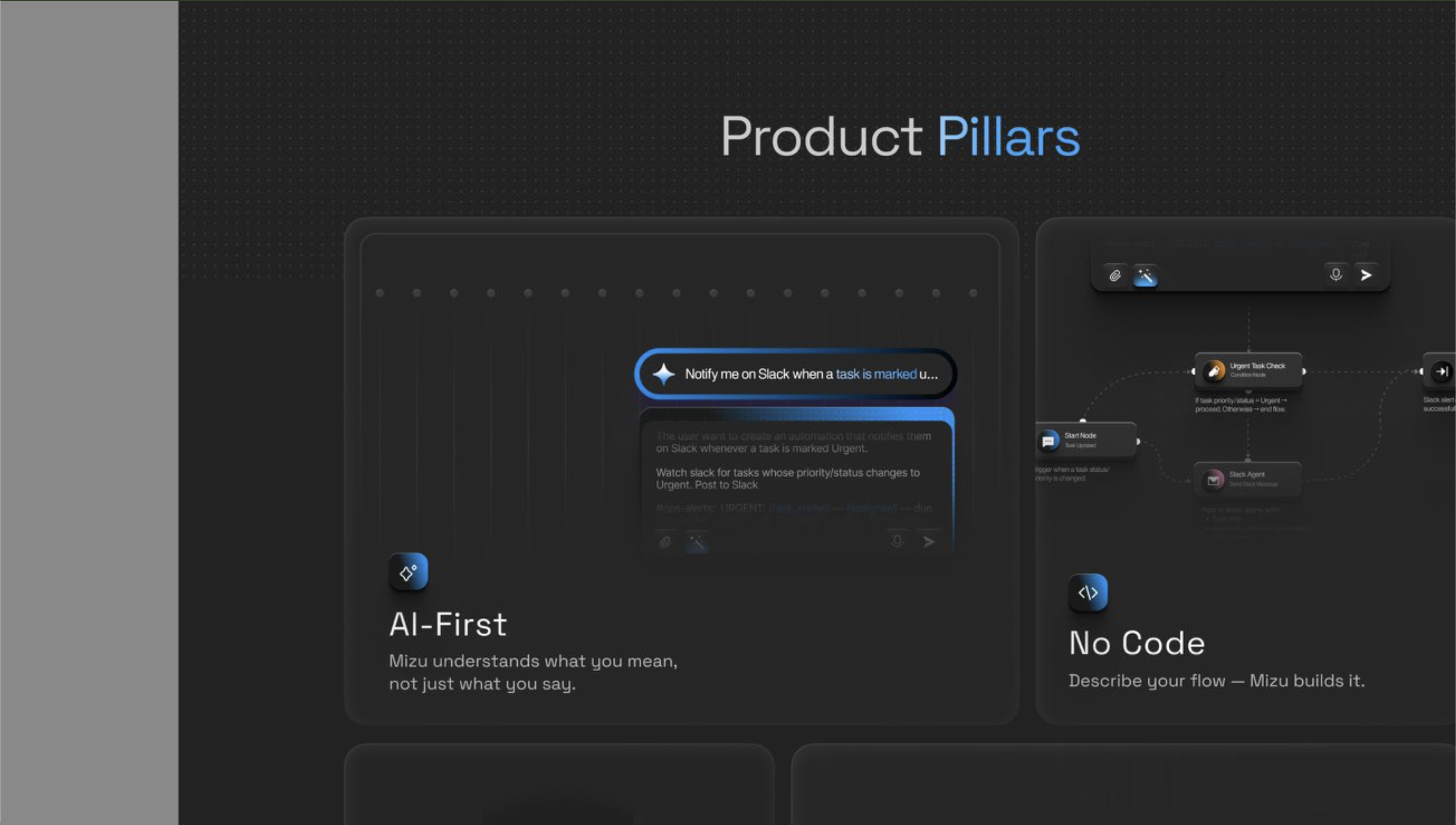
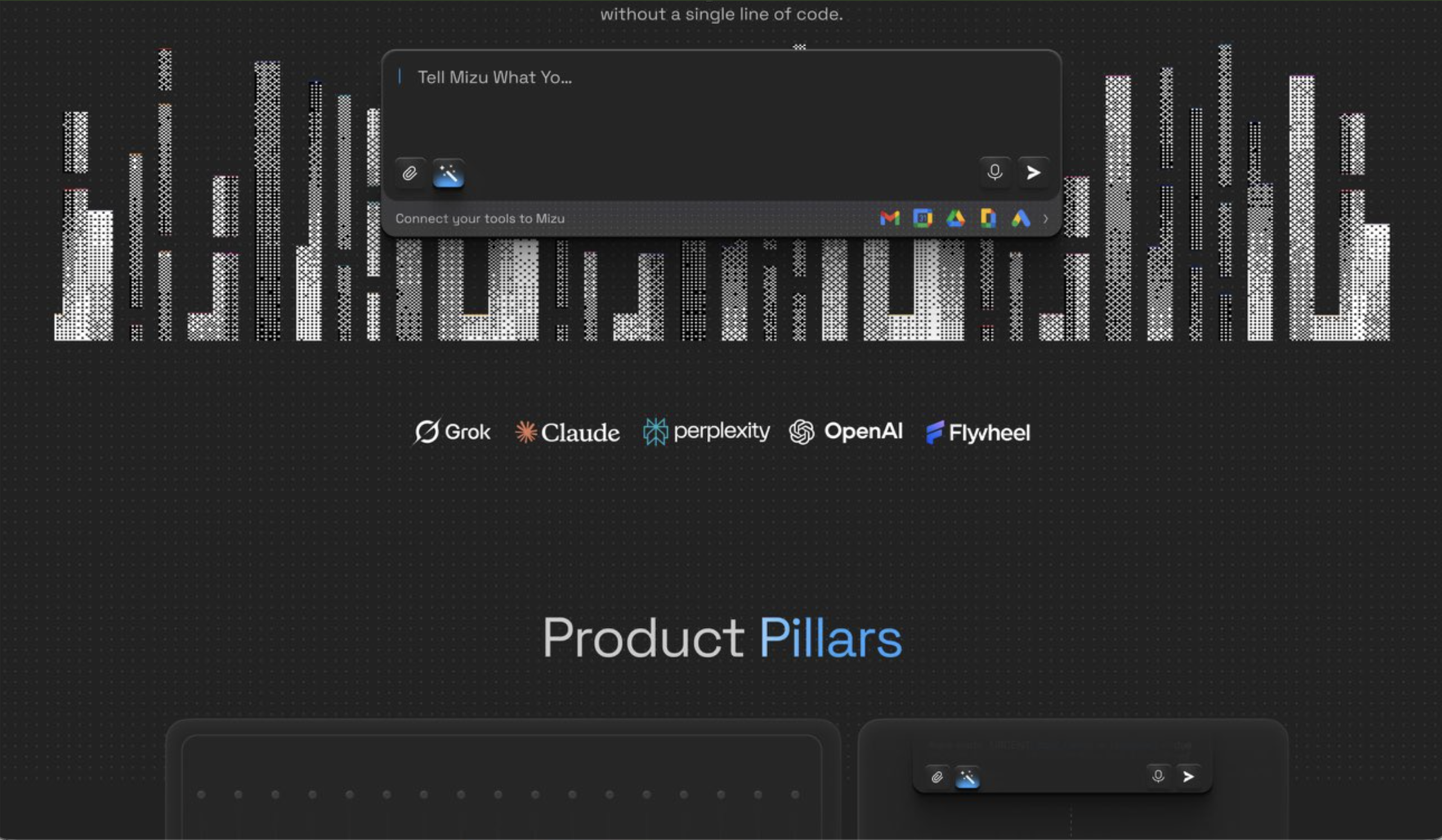
We built a conversational builder first: describe what you want, the AI asks what it needs to know, then builds it, with a visual canvas underneath for anyone who wants to see how it works. Five integrations (Gmail, Slack, Calendar, Notion, Docs) all set up the same reliable way, so adding a sixth later doesn't mean rebuilding the system. And a billing and credit system that limits usage without ever feeling like a paywall.
“Working with Harshil and DreamLaunch to build my automation builder MVP was great. They didn't just code what I asked for. They built a solid foundation that I can actually scale from. If you need a technical partner who understands both the build AND the business side of early-stage products, I'd highly recommend DreamLaunch.”
Andrej
Founder, Mizu AI