




search "ai copilot development services" and the top-ranking result answers none of your actual questions. no price. no real timeline. just "contact us to find out."
the category is real and growing, enough that a dozen agencies now publish a dedicated page for this exact phrase, all competing for the same buyer. but one specific competitor's own copilot services page, ranking above the rest, has zero concrete numbers anywhere on it, not a dollar figure, not a real client name, not a timeline that isn't "it depends."
figuring out what this actually costs and takes, before a sales call, is the hard part.
the fix: we found a competitor who does publish real numbers on their own site, and used that as the anchor to work out what this category actually costs, so you know what you're walking into before the first call.
Short answer: Intellectyx, a real AI development company, states directly on its own site that custom enterprise AI copilot engagements typically run $60,000 to $200,000, depending on integration count and data complexity, with most clients starting on a scoped 6-8 week build to validate the idea before expanding. that's the real floor for an enterprise-integration-style copilot. building a smaller, standalone AI copilot as a new product rather than an integration into existing enterprise systems is a different, smaller-scoped purchase, and the two shouldn't be priced against the same number.
what you'll learn
- why the top-ranking page for this exact search answers neither of the two questions a real buyer actually has
- a real, sourced price range for an enterprise-integration AI copilot, direct from a company that actually publishes it
- what an "AI copilot" actually is versus a general AI agent or chatbot, and why the distinction changes what you're buying
- the specific questions that get a real number out of a vague sales page
- where a smaller, standalone copilot build differs from the enterprise-integration price floor above
what does the top-ranking page for this search actually tell you?
LeewayHertz's "AI Copilot Development Company" page ranks #1 for this exact search. it's a real, detailed page: a six-step process, a list of industries served, a full FAQ section. what it doesn't have anywhere is a number. its own FAQ answer to "how long does it take to develop and deploy an AI copilot?" reads: "we will provide a highly accurate timeline after understanding your specific needs." that's not a timeline, it's a placeholder for one.
this isn't a criticism of LeewayHertz specifically, it's the default shape of almost every page in this category. cost and timeline are exactly what a founder searching this term wants to know before a sales call, and exactly what most pages in this space are built to withhold until after one.
the reasoning behind that isn't necessarily bad faith. a real enterprise copilot build genuinely does vary a lot depending on how many systems it needs to touch, so a vendor withholding a number until they understand your specific setup isn't automatically dodging the question. but there's a real difference between "we need a scoping call before quoting your exact number" and giving zero range at all, not even a floor. the first is reasonable. the second leaves a founder with nothing to plan a budget around before ever picking up the phone.
what does an ai copilot actually cost?
Intellectyx, a real AI development company named directly in Google's own AI-generated answer for this search, is one of the few that publishes a real number: "custom enterprise AI copilot engagements at Intellectyx typically range from $60,000 to $200,000 depending on number of integrations, data complexity, user base size, and whether you need a POC first or a full production deployment. Most clients start with a scoped 6-8 week build to validate the core use case before expanding."
that's specific enough to actually plan around. Intellectyx also states it has 500+ global clients and has received recognition from IAOP, TiE50, and Gartner, real, checkable credentials attached to a real number, which is a stronger signal than a vague page with no numbers at all.
a second, independent source confirms the timeline part of that range. Entrans's own published guide states: "a basic copilot or MVP usually takes 4 to 8 weeks to deploy. for complex systems, it generally extends to 3 to 6 months." that lines up closely with Intellectyx's own 6-8 week scoped-build figure, two independent vendors landing in roughly the same window for an initial build, which is a real, cross-referenced answer rather than one company's marketing claim standing alone.
worth noting: that same Entrans guide is itself a "top 10 AI copilot development companies" list, and it ranks Entrans #1, with McKinsey, IBM, Infosys, Accenture, and Cognizant filling out most of the rest of the list. the same enterprise-consultancy pattern shows up here that shows up across almost every "best AI company" search, the names doing the ranking tend to rank themselves near the top, and the companies filling out the list tend to be sized for a buyer with a procurement department, not a founder.
Enterprise copilot pricing, real numbers
$60K floor, 6-8 weeks to scope
what one real vendor actually publishes, versus what most pages withhold.
| Price range | $60,000 to $200,000 |
| Initial scope | 6-8 week POC to validate core use case |
| What drives the range | Integration count, data complexity, user base size |
dreamlaunch
Source: Intellectyx's own AI copilot development services page, 2026-09-15.
what is an ai copilot, exactly, and how is it different from an ai agent?
an AI copilot rides alongside a person doing their job. an AI agent goes and does the job itself. a copilot suggests, drafts, and assists inside a workflow a human is still driving, code completion, a draft email, a suggested next step. an agent is given a goal and works toward it with less direct human steering at each turn.
the term itself comes from GitHub Copilot, the product that popularized "copilot" as shorthand for an AI assistant embedded directly inside a workflow rather than a separate chatbot you switch over to. that's the useful part of the metaphor to hold onto: a copilot lives inside the tool you're already using, not in a new tab.
that distinction matters for this specific search because "AI copilot development services" and the broader "AI agent development" cluster get treated as near-synonyms across most of the pages ranking for both terms, when they're really describing two different products with different scopes. if what you actually want is something that operates autonomously rather than assisting a human in real time, the AI agent development services breakdown is the more accurate starting point than this one.
what should you actually ask to get a real number?
- "what's the price range for a scoped 6-8 week POC, not the full production build?" Intellectyx's own number gives you something to compare an answer against directly.
- "how many systems does this need to integrate with?" Intellectyx names integration count as the single biggest driver of where you land in the $60K-$200K range. a copilot touching one system is a very different build from one touching five.
- "can you name a real client and what the copilot actually does for them?" a vague page with no numbers and no named examples is a real signal, not proof of bad work, but a reason to ask more directly before committing.
- "is this an integration into our existing systems, or a new standalone product?" the $60K+ enterprise-integration price floor above assumes the former. a new, standalone AI copilot built as its own product from zero is a smaller, differently-scoped build.
this Kevin Stratvert walkthrough is a genuinely thorough look at what an enterprise copilot actually does day to day once it's live, worth the time if the category still feels abstract:
what does a smaller, standalone copilot build actually look like?
the $60K-$200K range above is real, but it's specifically an enterprise-integration price, built around connecting into existing systems a large organization already runs. a standalone AI copilot, built as a new product from zero rather than bolted onto existing infrastructure, is a different, smaller scope.
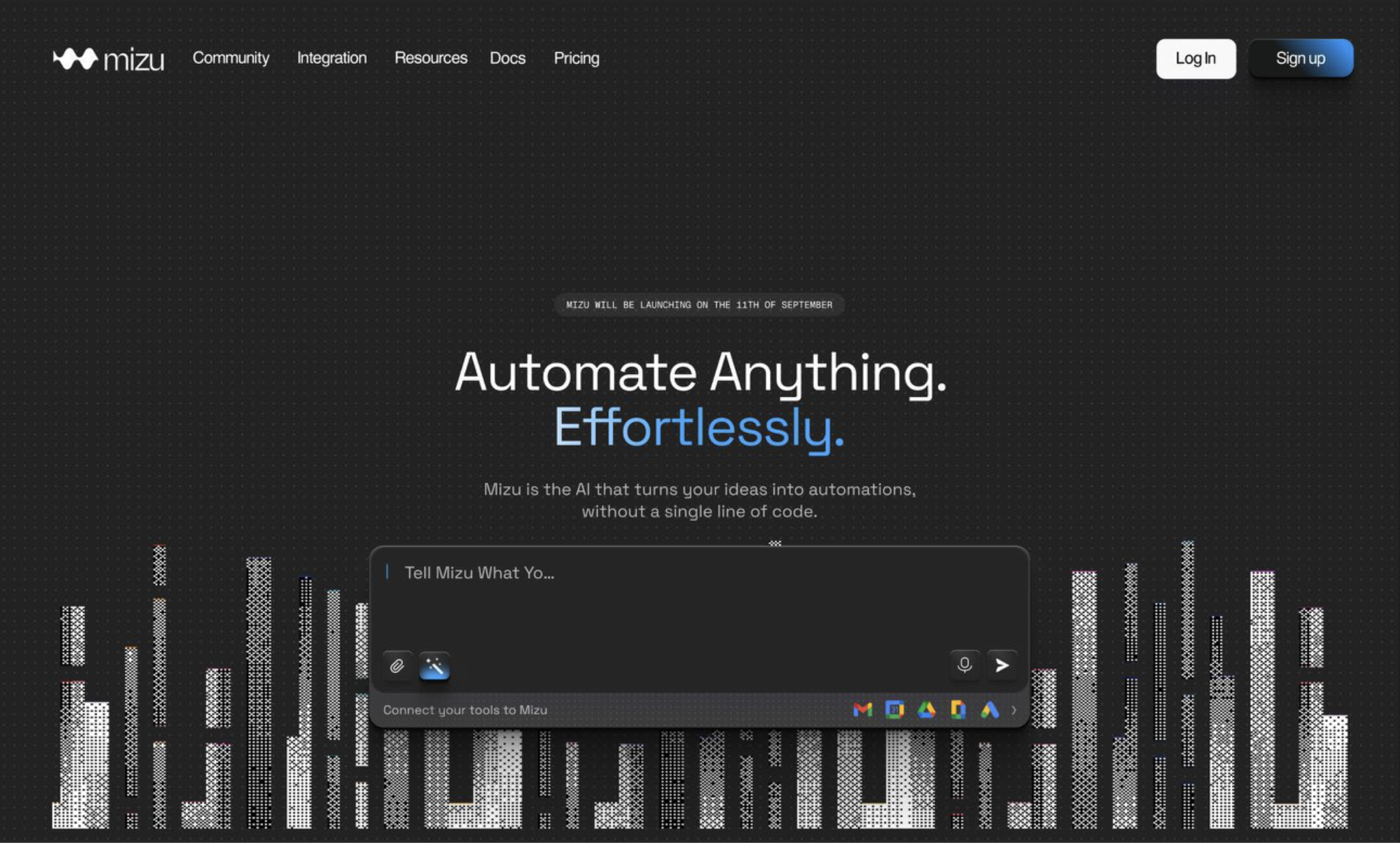
Mizu AI is the closest honest comparison DreamLaunch has shipped: a generative-AI-native automation product built from an idea with no existing product or team, to a live system with a conversational builder, a visual canvas, five real integrations, and billing, in 6 weeks. same rough timeline as Intellectyx's own quoted POC window, but a new standalone product instead of an integration into a client's existing enterprise stack, which is why the price tiers look different even though the weeks-to-ship number rhymes.
one honest note: DreamLaunch doesn't build enterprise-integration copilots at the $60K-$200K tier described above, that's genuinely Intellectyx's territory, not ours. we build standalone AI-native products for founders at the pre-seed to seed stage, fixed scope, 4-6 weeks. if your copilot needs to plug into an existing enterprise stack with multiple systems, the enterprise-focused vendors above are the more honest recommendation.
the underlying test that applies past this one search: if a page can't tell you whether you're looking at an enterprise-integration price or a standalone-product price, it hasn't actually answered your question yet, no matter how detailed the rest of the page looks. a six-step process diagram and an industries-served list feel thorough, but they don't tell you what any of it costs or how it changes if your build is smaller than the page assumes. ask for the range before the scoping call, not after it.