




i got a message at 11 pm. a client in bangalore said he’d made a mistake.
not a small mistake. the kind that meant his product, the one he’d been working on for months, wouldn’t launch in time for his fundraising window. the agency quote was $100k, the freelancer had ghosted, and the calendar showed 6 weeks to demo day. his real fear wasn’t the money. it was the dead months between now and a live product.
this is the AI product development cost no one talks about.
Quick Answer: For an AI feature or application MVP, real cost ranges from $6,500 to $25,000+, with a live product shipping in 2–10 weeks. This anchors against broader market averages—like a $120,000+ Clutch-reported project—but focuses on founder velocity over total spend. The cheapest price is the one that gets you to launch before your window closes.
By Harshil Tomar, Founder — DreamLaunch has shipped over a dozen AI products since 2022.
The Real Cost Isn't the Quote; It's the Time-to-Launch
you can find a dozen articles giving you a range. $50k to $500k. thanks, very helpful.
the real math for a founder isn't in the invoice total. it's in the months of your life you trade for a line on a gantt chart. it's the fundraising window that closes while you're still 'exploring architectures.' it's the pilot customer who moves on because your 'proof of concept' is still proof of nothing.
i see this split by geography. for a US founder, cost-effective often means cheaper. for a founder in singapore, dubai, or london, it means premium execution delivered fast. the cost of missing your moment is the same.
an AI product development cost breakdown that only talks about dollars is lying by omission. the first line item is always time.
The 3 Core Decisions That Dictate Your AI Build Cost
three choices, made before a single line of code, decide everything.
1. foundation model vs. fine-tuned vs. custom
you’re building a knowledge tool. option one: prompt gpt-4o with a context window of your notes. cost: API calls. option two: fine-tune llama 3.2 on your proprietary dataset. cost: training time, GPU hours, ongoing maintenance. option three: build a custom model from scratch. cost: your sanity and most of your seed round.
we built mosaic, an AI storytelling app for kids, with openAI, dall-e, and google TTS APIs. the AI was the product. we didn't train a model. we orchestrated existing ones into a new experience. shipped in 7 weeks.
the biggest cost lever isn't which model you pick; it's how honestly you assess whether you need a custom model at all. most don't.
2. data: clean, structured, and ready vs. a mess
a norway-based B2B SaaS founder came to us for a lead scoring agent. his 'data' was 10,000 messy LinkedIn profiles and call transcripts. we used grok fast for ICP scoring, grok for context pull, and llama for DM generation. the AI logic took a week. making the data something the models could read took three.
data prep is the silent budget killer. everyone quotes the engineering. nobody factors in the week you'll spend turning PDFs, spreadsheets, and legacy DB tables into something a vector database won't choke on.
3. build depth: mvp, production-ready, or enterprise-scale
a $6,500 fintech mvp for us meant 14 screens, stripe, auth, and a core workflow. shipped in 48 hours. it was live. users paid. we later fixed onboarding and lifted retention 15% without adding features.
contrast that with a $17,500 simulation engine app for an SF founder. 40+ screens fully mapped before development. two dead ideas scrapped before the brief locked. 3 months to close.
'production-ready' is a spectrum. an mvp that’s live is more valuable than a 'production-grade' system still in figma. your window decides the depth.
Cost Breakdown by AI Product Type (From MVP to Production)
here’s what we’ve actually built and shipped, by category, anchored to real projects. While industry averages from sources like Clutch can sit above $120,000, our focus is on founder velocity with focused MVP scopes.
| Type | Cost | Timeline | Best For | Real Project |
|---|---|---|---|---|
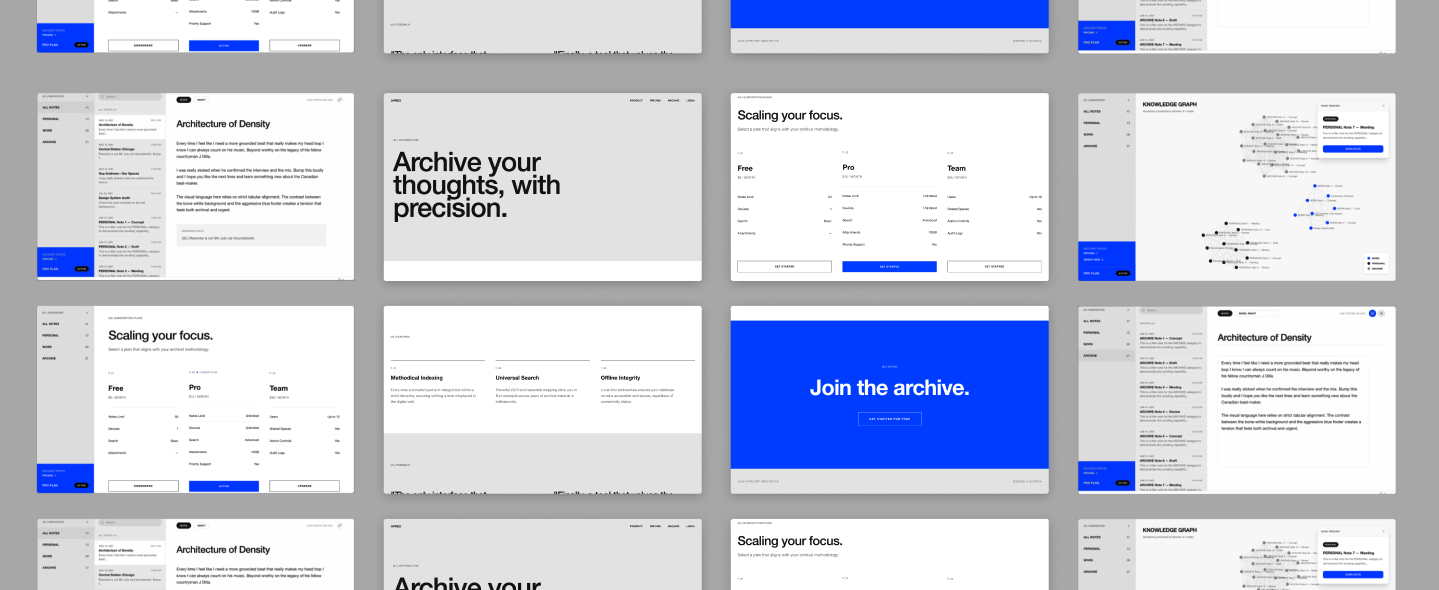
| AI-augmented feature MVP | $6,500 – $15,000 | 2 – 4 weeks | Adding a core AI workflow to an existing product | Aprex – precision tool with AI command palette |
| AI-native application MVP | $12,000 – $25,000 | 6 – 10 weeks | A standalone app built around multi-model AI | Mosaic – AI storytelling app for kids |
| Production-ready AI SaaS feature | $20,000 – $40,000 | 8 – 12 weeks | Taking a proven MVP to polished, scalable readiness | Humano – RFP tool scaled for enterprise |
| AI agent / autonomous workflow | $10,000 – $25,000+ | 3 – 6 weeks | Automating a multi-step business process | Lead scoring & outreach agent for Norway B2B SaaS |
notice the ceilings. a photographer booking platform POC failed because the core mechanic—standardizing availability—couldn’t hold. sometimes the cost is learning what not to build.
The Hidden, Ongoing Costs That Wreck Runway
the initial build is the entry fee. the ongoing costs are the subscription.
1. inference & API bills
you built it. now every user action costs you money. a RAG chatbot with 100 daily active users can easily run $500–$2,000/month in openAI fees. if your pricing is per-seat flat-rate, you can lose money on power users.
2. maintenance & model drift
AI isn't software. the models update, prompts break, vector indexes need refreshing. we have a $3,500/month momentum retainer for clients who need their product to not degrade over time. it’s not a luxury; it’s a realism.
3. founder time as project manager
this is the most brutal, unquoted cost. the 10 hours a week you spend chasing a freelancer for updates, explaining your vision to an agency for the fifth time, or managing a CTO hire who’s in over their head. that’s 10 hours not spent on sales, fundraising, or talking to users.
we fix this by taking the whole problem. see our process. you get a single point of contact, a team that ships, and your time back.
Build vs. Buy vs. Partner: A Framework for Non-Technical Founders
you have a deadline. here’s how to choose.
build in-house
do you have 3–6 months to hire, vet, and manage a senior AI engineer? do you have a technical co-founder who will own this? if you answered no, this path burns time you don’t have. the cost isn't salary; it's the 4-month delay to v1.
buy (no-code/low-code, off-the-shelf API)
can your entire product be a bubble.io wrapper around the openAI API? if yes, do that. but know the ceiling. most founders hit it 8 weeks in when they need a custom workflow, real data isolation, or a UI that doesn't look like a template. we’ve done $3,500 codebase cleanups for AI-generated messes with hardcoded keys and hallucinated packages.
partner (with a studio like ours)
this is for the founder who needs a live, custom product on a deadline. you bring the vision and urgency, we bring the team and system to build it. you trade cash for velocity and certainty. the cost is transparent: $6,500 for a launch sprint, $12k–$20k/month for a studio build.
the framework is simple: what’s your biggest constraint? if it's time, partner. if it's cash and you have time, build. if your needs are generic, buy.
Why DreamLaunch's AI Product Development Is Cost-Effective
it’s not because we’re the cheapest. it’s because we measure cost in the only currency that matters to a founder racing a deadline: weeks to a live product.
cost-effective means we eliminated the hidden tax of founder burn. you don’t project manage. you don’t translate between design and dev. you don’t pray the deployment works. we give you a single throat to choke, which is mine, and then we don’t give you a reason to choke it.
it means we’ve made the expensive mistakes already, so you don’t fund our learning. we built a photography booking POC that failed because the unit economics were wrong. we learned the hard way so your build hits the core mechanic first.
and it means we’re built for the global founder. for the US founder, we’re a rational alternative to a $150k agency quote. for the founder in singapore or dubai, we’re a premium execution partner who moves at your pace, not a valley timeline.
your AI product development cost isn't a number in a proposal. it's the sum of money, months, and mental bandwidth between you and a real product in users' hands.
if that timeline is your primary constraint, let's talk. bring your deadline.
FAQs
What is the typical cost range for an AI MVP?
For a focused AI MVP built by a partner like DreamLaunch, expect $6,500 to $25,000. This gets you a live product with a core AI workflow, basic UI, and integration, shipped in 2 to 10 weeks. The cost scales with complexity—a simple feature addition is at the lower end, while a full AI-native app like a multi-model storytelling tool is at the higher end.
What are the biggest hidden costs in AI development?
The two biggest hidden costs are ongoing inference bills and founder time. API calls for a live product can run hundreds to thousands per month. More costly is the founder hours spent managing freelancers, agencies, or a fledgling tech team instead of focusing on growth and fundraising. A true partner absorbs that management overhead.
How long does it take to build and launch an AI product?
With a dedicated partner, an AI feature MVP can ship in 2-4 weeks. A full AI-native application takes 6-10 weeks from concept to launch on app stores. The timeline depends less on code and more on decision velocity and data readiness. Clarity upfront prevents months of delays downstream.
Should I fine-tune a model or use an API for my AI product?
Start with an API. In 2026, foundation models (GPT-4o, Claude, Gemini) are powerful and cost-effective for most applications. Fine-tuning is necessary only if you have a massive, unique dataset and a specific performance gap that APIs can't meet. For the vast majority of founders, orchestration of existing models beats the cost and complexity of training.
What happens after the initial AI product is launched?
The launch is the beginning. Post-launch, you'll incur costs for hosting, API usage, and monitoring. More importantly, you'll need to iterate based on user feedback, handle model updates, and potentially scale infrastructure. Many founders opt for a ongoing retainer (like our Momentum plan) for maintenance and incremental improvements to protect their initial investment.