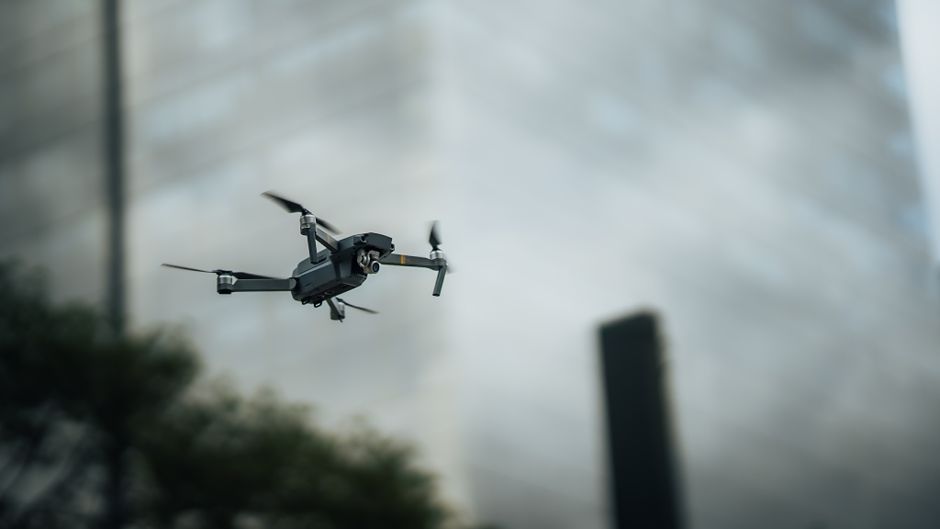





The United States has enacted a new wave of trade and regulatory barriers targeting Chinese-made drones and advanced robotic systems, citing national security concerns in a direct challenge to China's commanding position in these strategic industries.
According to a report by TechCrunch, the White House issued a proclamation on August 13, 2026, imposing a 100% tariff on imports of certain Chinese drones and components, effective September 3. The duty applies to drones weighing more than 25 kilograms, those equipped with thermal imagers, docking stations, and specific critical components. Smaller drones and other parts face a 25% tariff. The policy offers lower rates for allies including the European Union, Japan, Switzerland, Taiwan, and the United Kingdom, provided the hardware and technology originate there.
This move follows a separate action in July, where Washington tightened restrictions on foreign-made advanced robotic systems. These dual measures are part of a sustained U.S. effort to restrict foreign technology in sectors deemed critical. The framework for these actions is the FCC's "Covered List," established in 2021, which initially targeted telecommunications and surveillance equipment from companies like Huawei, ZTE, and Hikvision. The list has since expanded to include foreign-made drones and, most recently, advanced robotic devices.
The backdrop for these aggressive policies is China's established dominance in global production. Chinese manufacturers have built commanding positions in both the commercial drone and emerging humanoid robot markets, often competing at price points that U.S. and European rivals struggle to match. The scale gap is stark: data cited in the reports indicates that China's five biggest robot makers already control 86% of global shipments.
This manufacturing scale creates a compounding advantage, allowing for cheaper production and rapid iteration that tariffs alone may not negate. As one analysis framed it, while Washington is trying to price Chinese drones out of sensitive markets and block risky robots at the gate, the underlying "factory math" has not changed. The restrictions may protect segments of the American market, but they do not diminish China's overwhelming share of the global supply chain.
Broader Context and Industry Implications
The latest tariffs and bans raise a significant question for the global robotics and AI industry: if Chinese drones and humanoids are increasingly shut out of the U.S., where does the competition move next? The answer likely points to other global markets and to competition over the foundational supply chains and components that power these advanced systems.
The U.S. strategy mirrors earlier tech-sector decoupling efforts, particularly in semiconductors and 5G infrastructure. The expansion of the FCC Covered List to include robotics formalizes these systems as critical infrastructure, subject to the same scrutiny as communication networks. The national security concerns are multifaceted, encompassing fears of data surveillance, vulnerability to cyberattacks, and potential dual-use applications in military contexts.
However, the efficacy of a purely defensive, walled-off approach is debated. The policies create immediate challenges for U.S. industries and consumers that have come to rely on affordable, capable Chinese drones for agriculture, infrastructure inspection, public safety, and recreation. A 100% tariff effectively doubles the cost, which could stifle adoption and innovation in these sectors domestically. Furthermore, component tariffs scheduled for 2027 suggest the administration is looking to target not just finished products but the entire ecosystem, aiming to spur onshore or ally-shored production.
For the Chinese robotics sector, the U.S. moves represent a significant market closure but not an existential threat, given their global shipment volumes. The focus may shift toward deepening market share in Asia, Africa, the Middle East, and even Europe, where regulatory landscapes differ. It also incentivizes Chinese firms to accelerate technological self-sufficiency, particularly in advanced semiconductors and software, to make their products less vulnerable to future U.S.-led component bans.
The situation underscores a central tension in the geopolitics of technology: regulatory power versus manufacturing scale. The United States is leveraging its large, wealthy market as a regulatory weapon, setting rules for access. China is countering with the economic weapon of massive, efficient production scale and supply chain integration. The outcome of this clash will shape not only the future of the drone and robotics industries but also the broader trajectory of AI commercialization, where hardware embodiment and data collection capabilities are increasingly crucial.