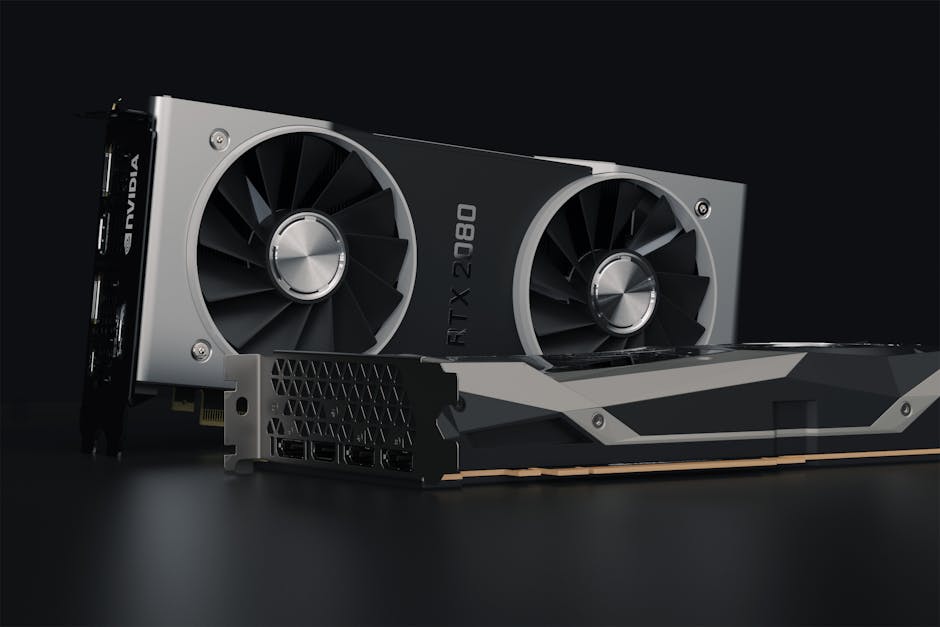





A new narrative is emerging around Nvidia's position in the artificial intelligence industry, shifting focus from its dominance in GPU hardware to its growing strength in the complex orchestration systems required to run modern AI data centers. According to a TechCrunch report, this shift in perception has been catalyzed by the company's recent earnings and reflects a broader industry realization about the next layer of AI infrastructure.
For years, the dominant story was that Nvidia's near-monopoly on high-end AI training chips was the cornerstone of its advantage. As the AI boom accelerated, the company was the primary source for state-of-the-art GPUs, a position that translated into immense profitability. However, the competitive landscape has evolved significantly in recent years. Major hyperscalers, including Amazon and Google, have begun designing and deploying their own custom AI accelerator chips, challenging Nvidia's status as the only game in town. This rise in competition led many investors to question the long-term durability of Nvidia's market advantage.
This investor concern was reflected in the company's stock trajectory. After an astronomical rise that saw Nvidia's market capitalization grow tenfold between the start of 2023 and mid-2025, its share price entered a period of more modest growth over the following year. The primary driver for this cooling-off period was widespread anxiety about the intensifying competition in the AI processor space from well-funded and technologically sophisticated rivals.
The latest analysis suggests that focusing solely on GPU competition misses a critical part of Nvidia's strategy and moat. As AI workloads have scaled, the physical and logistical challenges of running data centers have grown exponentially. The report notes that AI compute is now reaching the "gigawatt scale," referring to the enormous power consumption required to operate thousands of servers in unison for massive model training and inference. Managing this scale is not merely a matter of connecting more powerful chips; it requires a new layer of intelligence for data center operations.
This is where Nvidia's advantage is now seen to extend beyond silicon. The company has developed a suite of advanced hardware and software specifically designed for the orchestration of gigawatt-scale AI compute. Orchestration in this context refers to the sophisticated management of traffic, power, cooling, and compute resources across a vast, heterogeneous data center. It involves ensuring that data flows efficiently between processors, memory, and networking components without bottlenecks, that thermal loads are managed to prevent downtime, and that the entire system operates at peak efficiency. This complexity has become a primary hurdle for scaling AI operations.
Nvidia's work in this area represents a natural and strategic extension of its full-stack approach. By building not only the processors (GPUs) but also the networking technology (like its InfiniBand solutions) and now the core orchestration systems that manage the entire data center as a cohesive unit, the company is embedding itself deeper into the operational fabric of AI infrastructure. While competitors may offer alternative chips, replicating this deeply integrated stack of hardware and systems software presents a significantly higher barrier to entry.
The evolution of Nvidia's business highlights a maturation phase in the AI industry. The initial rush was to secure any and all available compute power, which favored the company with the most ready supply of high-performance GPUs. The current phase is about efficiency, reliability, and total cost of operation at a previously unimaginable scale. In this environment, the intelligence that manages the data center—the "smarter traffic control" referenced in the reports—becomes as critical as the raw processor cycles themselves. This shift benefits a company that can provide a holistic solution.
This emerging narrative, solidified by the company's late-August 2026 earnings report, suggests that investors are beginning to appraise Nvidia not just as a chip supplier but as a provider of essential, complex systems for the AI era. Its advantage is increasingly viewed as architectural and systemic, encompassing the entire data center environment necessary to run advanced AI. While competition for discrete AI accelerators will undoubtedly remain fierce, Nvidia's investments in the orchestration layer position it to play a pivotal role in the industry's next chapter, where scaling efficiently and reliably may be the defining challenge.