



a founder called me last year, three months into a $40,000 engagement with a development agency. they had wireframes. a project manager. weekly status calls. no product.
that's not a horror story. that's the default.
if you're evaluating an MVP development studio for startups right now, the decision you make in the next two weeks will either compress your timeline to launch or expand it to the point where your runway runs out first. i've watched both happen. this article is what i wish someone had handed me before i started building for other founders.
the real difference between a studio, a freelancer, and an agency
most founders come to this decision already burned by one of the three options.
the freelancer was fast to hire and slow to deliver. the agency quoted $80,000 and six months of "discovery." the no-code tool worked until the third feature request, then didn't.
i thought the answer was finding a better version of one of those three. it's not.
a studio is a different category. small team, senior people, fixed scope, predictable timeline. no account managers sitting between you and the person writing your code. the person who scopes your project is often the same person building it. that single fact changes the quality of every decision made during the build.
what you're actually buying from a good MVP development studio isn't code. it's compressed judgment — someone who has built enough products to know what to cut, what to keep, and what will quietly kill your launch if you include it in week one.
what a studio should do in the first conversation
the first call tells you almost everything.
if the studio asks about your stack before they ask about your users, leave. if they quote you a price before they've pushed back on a single feature, leave. if they say yes to everything in the scope doc you emailed over, definitely leave.
the right studio does something that feels uncomfortable at first: they challenge the scope. they ask what happens if they cut the dashboard entirely and launch with just the core flow. they ask how many users you need to validate the idea, not how many you're hoping to get in year two.
i had a founder come to us last year wanting to build a full marketplace — buyer side, seller side, review system, messaging, and a custom analytics dashboard. we shipped a single-sided tool first. it had one flow, one user type, and one clear job to be done. it got her first 200 users in three weeks. the marketplace came four months later, built on real feedback instead of assumptions.
that's the judgment you're paying for.
the AI-first question most founders forget to ask
here's where most studios are quietly falling behind and not telling you.
if the studio you're talking to is building your MVP the same way they built products in 2021 — sprint planning, Jira tickets, two-week cycles — they are slower than they should be. not because of the people. because of the process.
AI-assisted development isn't a feature a studio can bolt on. it changes how specs are written, how components are scaffolded, how edge cases are caught before they become bugs. a studio that has genuinely integrated AI into its build pipeline moves roughly 40–60% faster than one that hasn't — and that gap shows up directly in your timeline and your invoice.
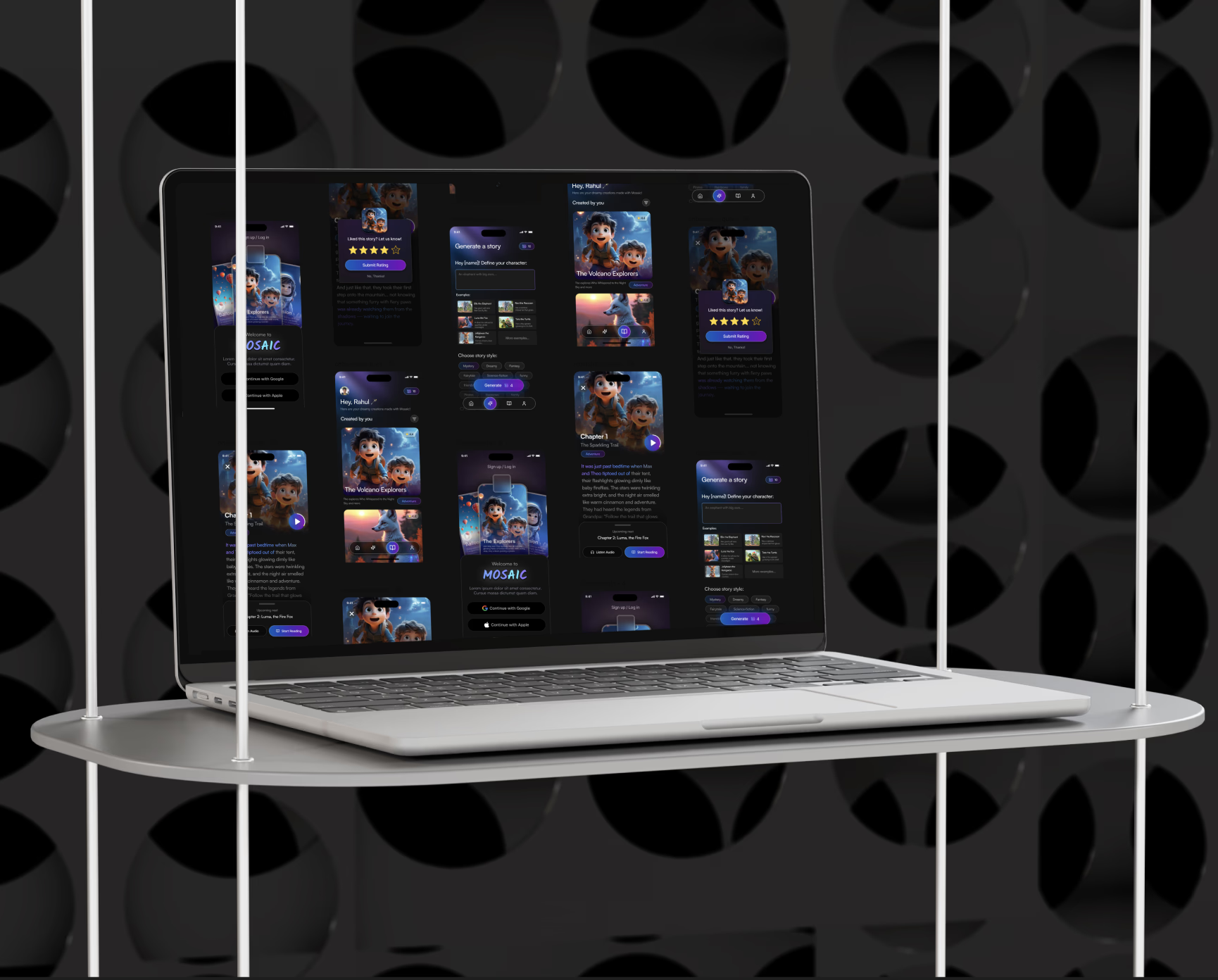
when we built Mosaic — an AI-powered app for interior design — from concept to App Store submission in 7 weeks, that timeline wasn't possible without AI tooling embedded throughout the build. not just the product's AI features. the development process itself.
ask any studio you're evaluating: what does your actual development workflow look like day to day? where does AI enter the process? if the answer is vague, that's your answer.
fixed price vs. time and materials — and why it matters more than you think
this is the contract detail that most founders gloss over and later regret.
time and materials means the studio bills you for hours. every scope change, every revision, every "quick fix" is an invoice line. your $25,000 project becomes $42,000 three months in and you're not sure exactly when or how.
fixed price means the studio absorbs the risk of underestimating. that changes their incentives in a way that is entirely in your favour. they scope tightly because they have to. they push back on feature creep because it costs them, not you. the quality of their upfront thinking goes up dramatically when they can't bill you for their own mistakes.
the right fixed-price engagement should feel slightly uncomfortable for both sides at signing — you're committing to a scope, they're committing to a price. that tension is healthy. it's what keeps the build honest.
you can see how we handle this at our pricing page — DreamLaunch builds are fixed price, starting at $6,500, scoped before a single line of code is written.
how to read a studio's portfolio without being misled by it
every studio has a portfolio. most portfolios are meaningless without context.
a screenshot of a beautiful UI tells you nothing about whether that product shipped, got users, or survived contact with the real world. the question to ask isn't "what did you build?" it's "what happened after you launched it?"
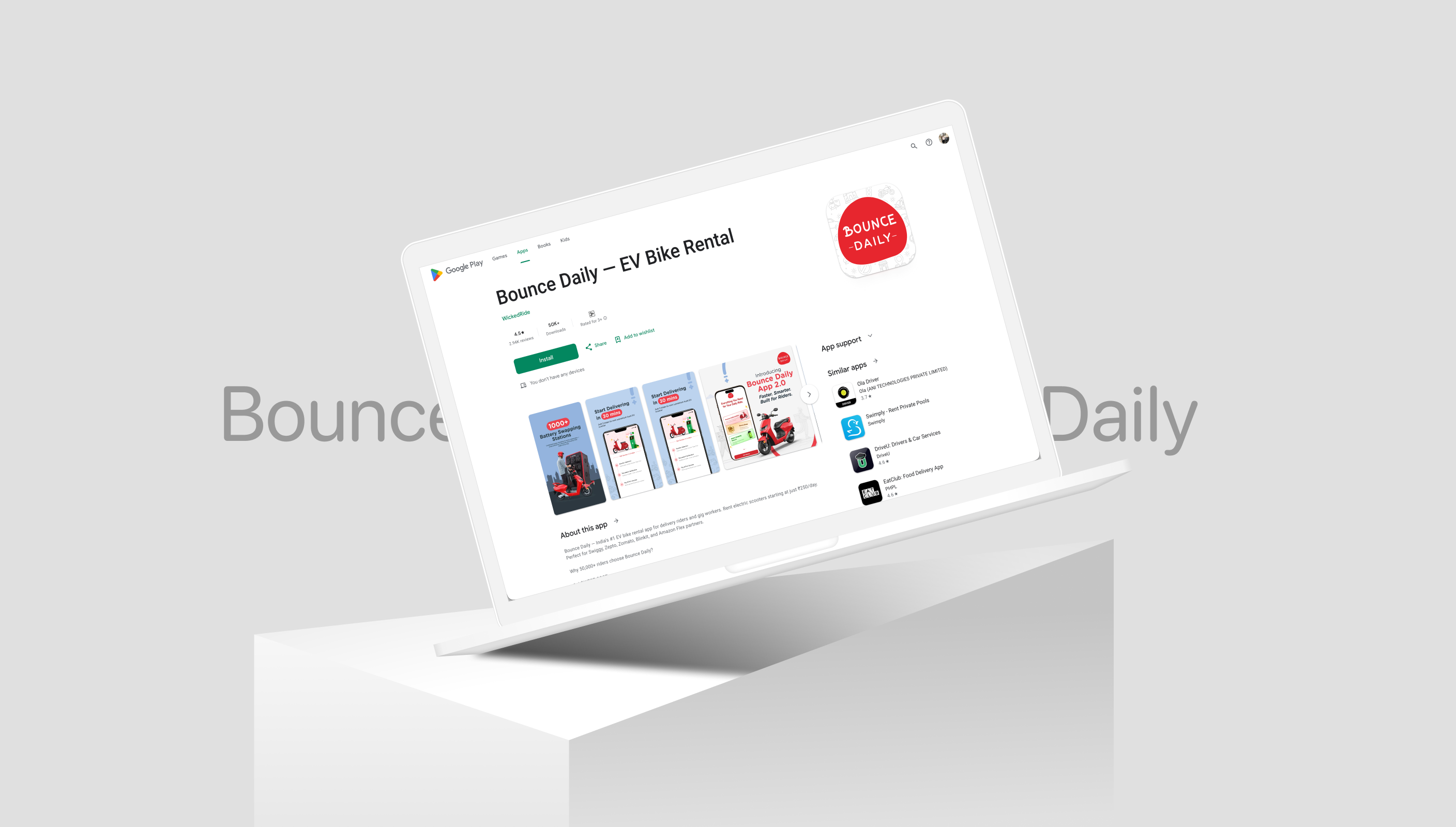
when we rebuilt Bounce Daily — a 100,000-user EV rental app — the metric that mattered wasn't the redesign. it was KYC conversion moving from 45% to 65% after we rebuilt the onboarding flow. that's a specific, measurable outcome that happened after launch. that's what a studio's track record should look like.
when you're reviewing a portfolio, ask:
- did this product actually launch, or is it a concept project?
- what was the measurable outcome — users, conversion rate, revenue, App Store rating?
- how long did the build take, and did it match the original estimate?
- can i speak to the founder who hired you?
a studio that can answer all four of those questions cleanly, for multiple projects, is a studio that has actually shipped things. everything else is just design work.
you can look at specifics from our builds at the DreamLaunch showcase.
the timeline question founders always ask wrong
founders ask "how fast can you build this?" when the question they should be asking is "how fast can we get to something real users can break?"
those are not the same question.
a 4-week MVP that ships one core flow, handles edge cases gracefully, and doesn't fall over under real usage is worth more than an 8-week MVP with six features and a polished onboarding sequence that no one has validated.
the studio's job is not to build the product you described in your brief. it's to build the smallest version of the product that lets you find out if your brief was right.
that reframe changes how you evaluate timelines. 4–6 weeks is the right target for a first production MVP if the scope has been properly cut. anything under 3 weeks with a complex product is a red flag — the studio is either cutting corners or oversimplifying what you actually need. anything over 8 weeks for an MVP is scope creep or inefficiency, and you should ask which one before you sign.
post-launch is where most studios disappear
the launch is not the end. for most founders, it's week two of the real work.
your first 30 days post-launch will produce more product decisions than your entire pre-launch planning combined. you'll find flows that confuse users. you'll find features no one touches. you'll find one use case you didn't anticipate that turns out to be the actual product.
if your studio evaporates at handoff, you're going back to square one — reacquainting a new developer with a codebase, re-explaining context that took weeks to build, losing momentum at exactly the wrong moment.
ask any studio what happens on day 29 after launch. if the answer is "we hand off documentation and you're on your own," that's a real cost to price into the engagement, not a footnote.
the one thing that separates good studios from the rest
i've thought about this a lot.
it's not the tech stack. it's not the size of the team or the number of logos on the homepage. it's not whether they use AI tooling or Jira or Notion or daily standups.
it's whether the person scoping your project has enough genuine product experience to tell you no.
no, that feature doesn't belong in v1. no, that's a solution to a problem you haven't confirmed exists yet. no, your timeline assumption is wrong and here's why.
a studio that only tells you yes is a studio that's optimising for winning your business. a studio that tells you no before you've signed anything is optimising for whether your product actually works.
one of those is a vendor. the other one is worth paying.
if you're at the point where you're ready to talk scope, timeline, and what it would actually take to ship your idea — reach out to us directly. we'll tell you what we think v1 should look like, what it shouldn't include, and what a realistic build looks like from here. no pitch deck, no proposal document with a six-week discovery phase. just a direct conversation about your product.