




type "how much does it cost to build an mvp" into google and you'll get a different number from every result. $5k. $50k. $250k. none of them are wrong. they're answering different questions while using the same three letters.
most mvps cost between $5,000 and $70,000. the real number is decided by three things: how complex the build is, what tech and features it needs, and who's building it. simple single-workflow mvps land at the low end. standard saas products with a few features and an admin panel sit in the middle. anything with ai functionality, multi-tenant architecture, or regulatory compliance (healthtech, fintech) routinely runs $100,000 to $450,000+.
that range isn't a hedge. it's the actual shape of the market: three independent sources we checked (EnactOn, Techtic, and Resourcifi) all publish cost breakdowns landing in the same bands, the closest thing to a verified number you'll get before you have your own spec. Resourcifi's floor runs a little higher (their "simple" tier starts at $15K against EnactOn's $5K), but the shape agrees: cost climbs in the same three steps everywhere you look.
here's what actually drives where you fall in it, starting with what an mvp is actually supposed to do for you, since that's what most cost estimates skip.
What you'll learn:
- What actually drives MVP cost: complexity, features, and team, not the label "MVP" itself
- Real cost bands by tier, cross-referenced from three independent sources
- Whether AI tools like Cursor or Lovable can replace this step entirely
- The hidden, recurring costs that blow up a budget after launch
- What a freelancer, an agency, and DreamLaunch each actually deliver for the price
what is an mvp, actually?
a minimum viable product is the earliest working version of a product designed to solve one problem and produce real, measurable feedback from actual users. it's not a prototype. a prototype doesn't need to work. it's released, used by real people, and generates data on adoption, engagement, and willingness to pay.
the reason this distinction matters for cost: founders who treat mvp as "small version of everything" instead of "complete version of one thing" are the ones who blow past every estimate in this article. scope creep, not hourly rate, is what actually drains mvp budgets.
an mvp earns its cost in three concrete ways, per EnactOn's own client data:
- De-risking investment. CB Insights found 42% of startups fail because there's no market need. an mvp catches that before you've spent the full build budget finding out.
- Faster time-to-market. a saas mvp can launch in 8–10 weeks; a full product often takes 6–12 months. in a market this competitive, that gap is the difference between shipping into demand and shipping into silence.
- Investor traction. founders with even modest usage data from a live mvp raise money roughly 30% faster than teams pitching off a deck alone.
what changes the number: complexity tier
every agency structures pricing around the same three tiers, even when the exact numbers differ slightly.
Simple
$5K–$25K · 4–6 wksAuth
One core workflow
Basic UI
Standard
$25K–$70K · 6–12 wks3–5 features
Admin panel
Third-party integrations
Complex
$70K–$250K+ · 12–20 wksAI modules
Multi-tenant SaaS
HIPAA / PCI-DSS
dreamlaunch
MVP cost by complexity tier, cross-referenced from EnactOn, Techtic, and Resourcifi.
the jump from "standard" to "complex" isn't gradual. it's a step function, and it's almost always compliance or ai that triggers it. Techtic's own numbers show HIPAA compliance alone adding $20,000–$80,000 in infrastructure and documentation, before a single user-facing feature exists. a healthtech mvp built the exact same way as a consumer app, minus the compliance layer, would cost 1.5–5x less.
what changes the number: individual features
the feature list is where founders lose track of their own budget, because each addition looks small in isolation.
| Feature | Typical added cost |
|---|---|
| Authentication / login | $1,000–$3,000 |
| Payments | $3,000–$7,000 |
| Chat / messaging | $5,000–$10,000 |
| Analytics dashboard | $10,000–$15,000 |
| Real AI/ML functionality | $20,000+ |
(source: EnactOn cost breakdown)
none of these are unreasonable on their own. the problem is founders scope five of them at once, each one "just $5k more," and wake up at $60,000 having built a v1 that still isn't live.
location explains most of the swing in what those same features cost. the Stack Overflow 2025 Developer Survey puts the median US back-end developer salary at roughly $175,000, a fraction of that in common offshore markets. a lean mvp with one core workflow stays affordable wherever it's built. a feature-heavy one gets expensive everywhere, just faster in some places than others.
can you just skip this and build it yourself with ai?
every founder asks this now, and it deserves a straight answer instead of a dismissive one.
tools like cursor, claude code, replit, and lovable can take you from idea to a working, clickable demo in a weekend. if your only goal is validating a concept or showing investors a clickable story, that's often the right first move: cheap, fast, genuinely useful.
where it breaks is the part that doesn't show up in the demo. as Techtic put it: "ai changes who's typing the code. it doesn't change who's accountable for whether that code is correct, secure, and built to last." unvalidated ai-generated code rarely fails loudly on day one. it fails quietly by working fine until it doesn't. untangling it after the fact usually costs more than building it properly would have.
i've seen this exact arc more times than i can count: bolt or lovable builds something in 47 minutes, it works, the founder starts showing it to real users. then they try to add stripe, or proper auth with roles, or multi-tenancy, and the generated code that held together fine for demos starts showing its seams.
i thought generated code was the same as written code. it isn't. one is a draft. the other is a decision.
hidden costs nobody puts in the first estimate
the build itself is rarely where an mvp budget quietly blows past its estimate. it's what comes after:
- Post-launch maintenance: commonly 15–20% of the original build cost annually, ongoing (per Techtic). Galorath's industry benchmark lands in the same range, citing Gartner data of 10–25% in the first two years, rising to 15–30% by years three to five.
- App store fees: $99/year for Apple's Developer Program, plus a one-time $25 for Google Play Console. small on their own, easy to forget when budgeting.
- Third-party API fees: payment processors, SMS/email, mapping, charged per use, not flat.
- Compliance upkeep: not a one-time cost for regulated products, an ongoing obligation.
- Hosting & infrastructure: scales with usage, not with your original budget.
EnactOn cites a real example: a payment-processing SaaS client faced recurring SDK charges of nearly $400/month for fraud detection alone, small next to the build cost but invisible in the original spreadsheet. a healthtech client they worked with spent an additional $7,500 on HIPAA audits before onboarding a single user. budget 10–15% specifically for the unglamorous stuff that shows up after launch, not just the build.
what this actually costs at dreamlaunch
most of the numbers above come from blended estimates and industry ranges, useful for orientation but useless for actually deciding what to spend. remember the three quotes from the opening: freelancer, agency, enterprise shop?
a freelancer is a single craftsman, working alone. a typical agency is a general contractor: the senior sells you the job, then hands the actual building to juniors you never meet. DreamLaunch is the crew that scoped the job doing the work itself, no handoff in between.
the difference isn't professionalism. it's how many people stand between the person who understood your idea and the person who actually builds it. here's what that gap actually costs, beyond the number:
Three ways to build
Freelancer vs. Agency vs. DreamLaunch
Same three letters, three completely different engagements. What you're actually buying changes more than the price does.
|
Freelancer Cheapest hourly rate |
Typical Agency Biggest team, biggest markup |
DreamLaunch Fixed scope, fixed price |
|
| Scope | Negotiated per task, drifts constantly | Locked into a 40-page SOW | Fixed at kickoff, 4–5 weeks |
| Pricing | Hourly, unpredictable total | $45K+, opaque line items | $6,500, stated upfront |
| Who builds it | One person, no backup | Juniors build, seniors sell | The same team that scoped it |
| Timeline | Whenever they're free | 8–16 weeks, often slips | 4–5 weeks, fixed |
| Fails when | They disappear mid-project | Scope creep inflates the invoice | The scope genuinely needed to grow |
dreamlaunch
DreamLaunch pricing, current as of publish; /pricing is authoritative.
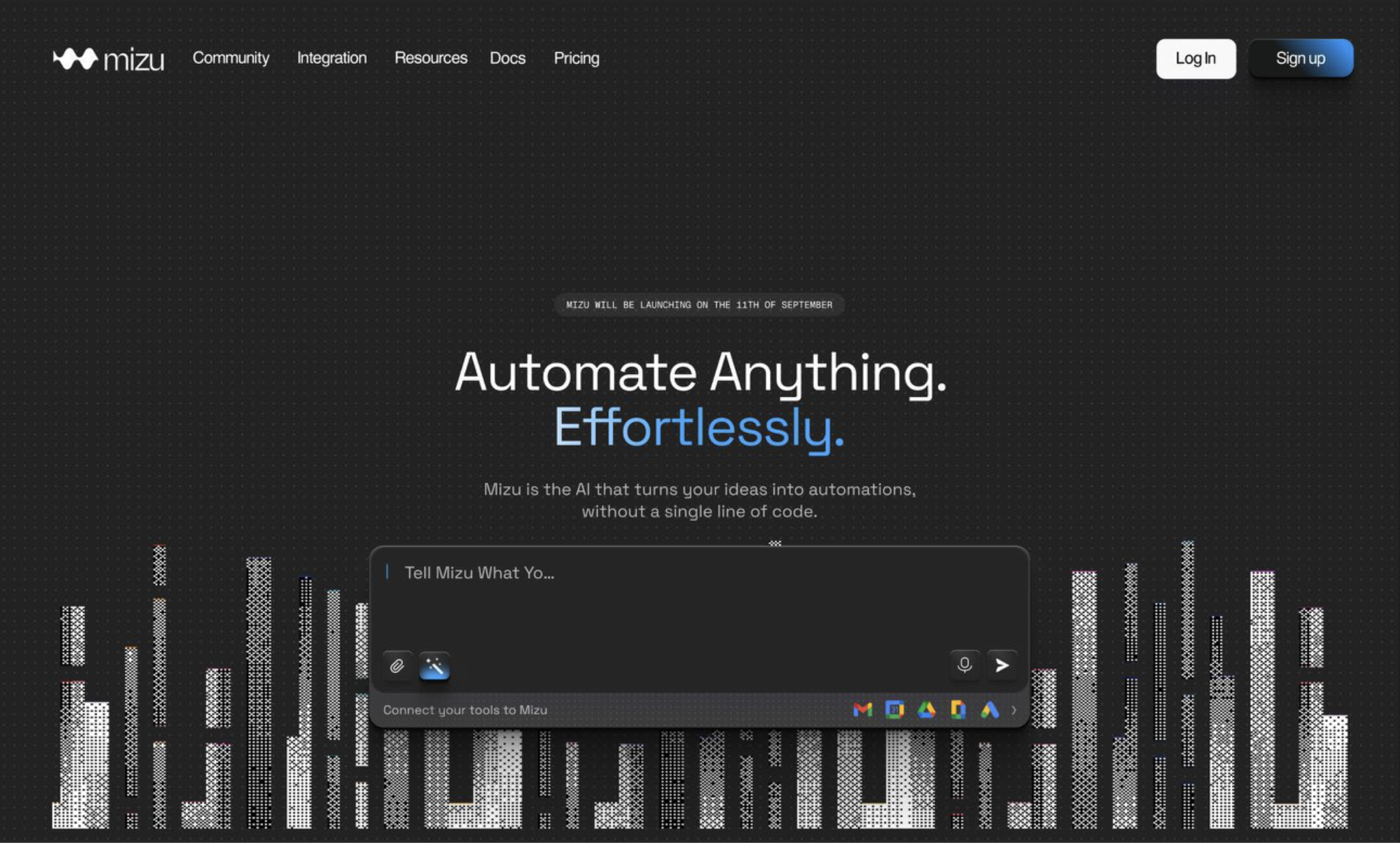
the launch sprint sits inside the "simple" tier from the tables above, on the low end of the range, with a fixed scope and a fixed number instead of a quote that moves once you're three weeks in. that's not just theory: Mizu AI went from an idea and nothing else, no product, no frontend, no backend, no team, to a live, full-stack automation builder in 6 weeks.