



a US-based founder messaged me at 3am his time.
his freelance developer had just ghosted him. six weeks before a critical demo day. his no-code prototype hit a hard limit. a local agency quoted him $120,000 for a six-month build.
he had a deck, a vision, and a calendar notification counting down to zero. no product.
he wasn't looking for a development partner. he was looking for a guarantee. a live thing, at a real URL, that he could show in that room. the fear wasn't wasting money. it was missing the window entirely.
this is the call we're built for.
why US founders choose an india-based mvp agency
it's not about cheap labor. it's about focused velocity.
the math is simple but the psychology is deeper. a 40–60% cost saving isn't just a line item. it's the direct financial offset for your last attempt failing. the ghosted freelancer, the agency that ballooned the scope, the six months you can't get back.
you're not paying for hours. you're paying for the elimination of a specific, chilling risk: the risk of having nothing to show when it matters most.
we position that saving as runway for the next phase. not as a discount.
and we know the hidden objection. it's not 'can they code?' it's 'will they get me?'
this is why our communication is english-first and async by design. not as a convenience, but as a quality signal. we send structured briefs at the end of our day, you review them over your morning coffee. you wake up to progress, not promises. it's a deliberate system for founders who've been burned by the black box of offshore development.
it turns the timezone difference from a liability into your most reliable productivity hack.
the value isn't lower cost. it's higher certainty.
the dreamlaunch process: from idea to live product in 4–6 weeks
most agencies sell you a process. we sell you an outcome.
the outcome is the psychological shift from 'we're building it' to 'here it is.' that's the only metric that matters for a founder staring down a deadline.
our process is built to engineer that shift as quickly as possible.
we start with a blueprint. a $1,500 one-time deep dive where we map your entire product, screen by screen, flow by flow, before a single line of code is written. we did this for a simulation engine mobile app for an SF founder. 40+ screens fully mapped. it took 3 months to close the deal, because we killed two dead ideas before the founder locked the final brief. that mapping prevented a $17,500 mistake.
then we move to the build. typically a launch sprint for $6,500.
we don't work in sprints you manage. we work in days you own. we built a fintech mvp — 14 screens, production-ready, with stripe and plaid — in under 48 hours. after launch, the founder saw a 15% drop-off at onboarding. we fixed it in an hour. retention lifted 15% without touching a single core feature. the fix was in the journey, not the code.
the final handoff isn't a zip file. it's a live product on vercel, a loom walkthrough, and a support channel. a bangalore client messaged at 11pm saying he'd made a mistake. we got on a call at midnight, pulled the team in the next morning, and delivered a production-ready fix with a loom video by evening. he replied in 11 minutes. he stayed, and referred two more clients.
the process exists for one reason: to compress your time to reality.
our fixed-price packages: no surprises, just a working product
i hate hourly billing. it incentivizes the wrong thing.
our pricing is public and fixed. because your risk should be on the market, not on your vendor's clock.
- blueprint: $1,500 one-time. the complete architectural map. proves we understand the problem before you commit to the build.
- launch sprint: $6,500 one-time. the core mvp. 4–6 weeks. you get a live, investor-ready product. like the fintech mvp we shipped in two days.
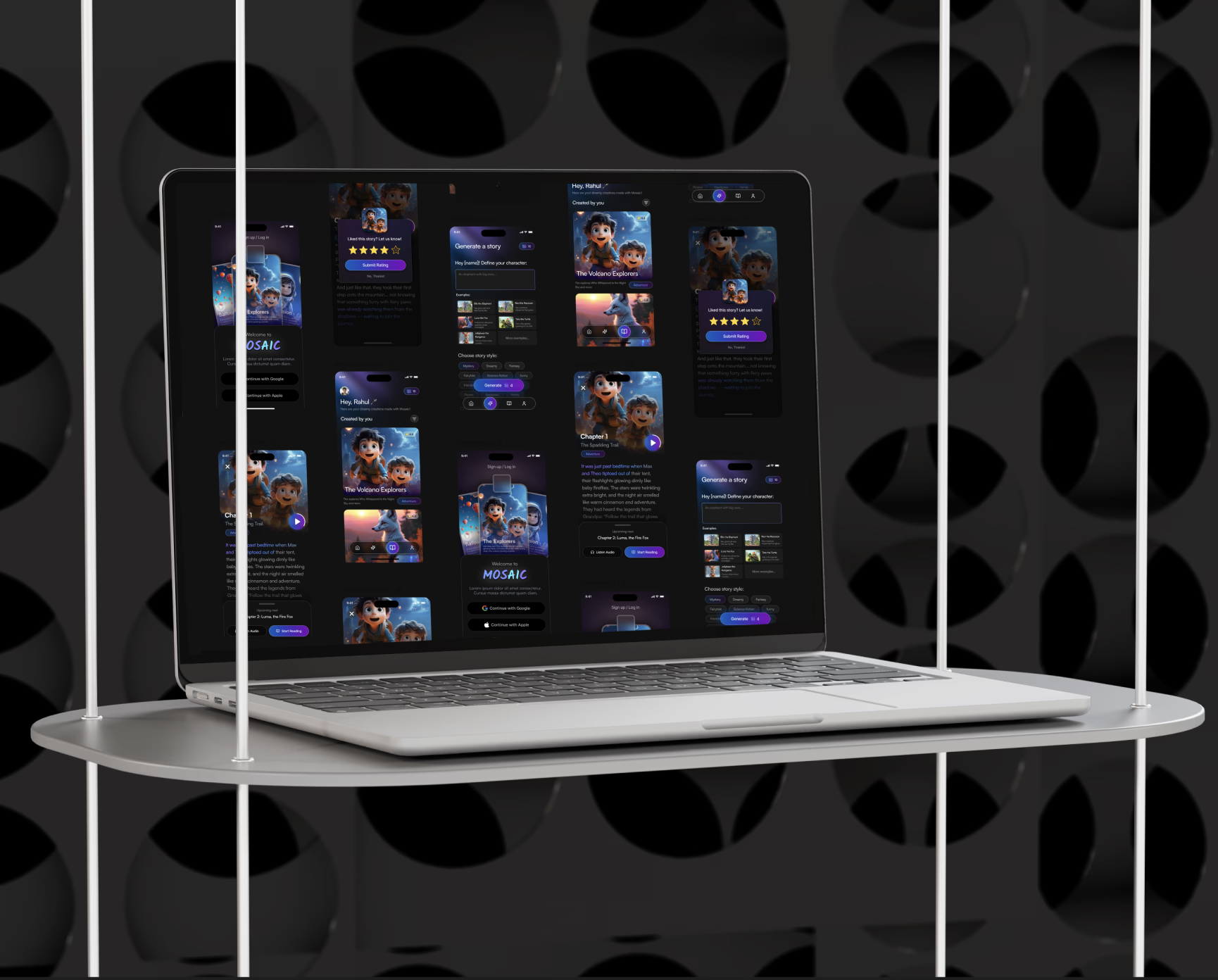
- studio build: $12,000–20,000/month retainer. for ongoing velocity post-mvp. we ran this for mosaic, building their ai storytelling app for kids from zero to app store in 7 weeks.
- momentum: $3,500/month maintenance retainer. keep the lights on, the users happy, and the platform stable while you fundraise or sell.
this fixed-price model forces clarity. it means our success is tied to yours. we only win if you get a product that works.
the ghosted freelancer cost you time. the bloated agency quote cost you hope. this is designed to give both back.
built for global markets: english-first communication & yc-ready quality
i once had to fix a 6-month-old, 400+ file codebase generated by ai for a client.
we charged $3,500 for the vibe-coded cleanup. we found 4 hardcoded api keys, 3 parallel auth implementations, no foreign keys in the database, and 5 npm packages that didn't exist. the founder thought he had an mvp. he had a security incident and a scaling blocker waiting to happen.
yc-ready quality isn't about using the trendiest framework. it's about the decisions invisible to the user.
typed typescript, not javascript. proper database indexing from day one. auth that doesn't reinvent the wheel. environment variables, not hardcoded keys. it's the engineering discipline that lets you sleep at night after you launch.
and it's communicated in plain english.
we write every update, every spec, every decision log in clear, concise english. because your investors, your co-founders, and your early design partners need to understand it. this is a non-negotiable standard for our clients in the US and UK.
your product might be built in india. but its voice, its clarity, and its quality ceiling are set for san francisco, london, and singapore.
case study: shipping a saas mvp before a seed round deadline
the founder had a wireframe and 8 weeks until his seed round closed.
his previous 'cto' had delivered 10,000 lines of unmaintainable code. investors were asking for a demo. he had nothing to show.
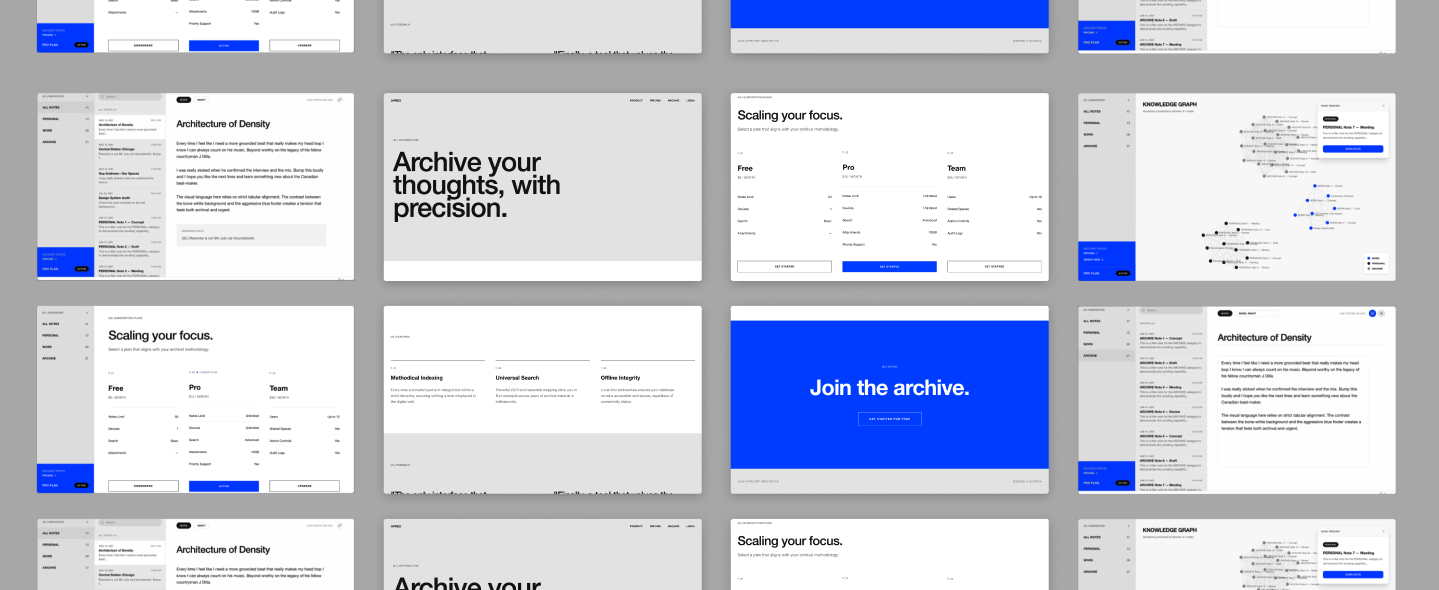
we started with the blueprint. mapped a saas product with a custom d3.js knowledge graph, a cmd+k command palette built from scratch, and a local-first data architecture. 50+ screens.
then we executed a launch sprint. we built the react spa, the node.js api, the works. we shipped a private launch version in under 6 weeks.
he didn't just get a demo. he got a live product his design partners could use. the feedback from those early users became his strongest narrative point with investors.
he closed the round.
the product wasn't the mvp. the closed round was. the mvp was just the key that turned the lock.
another founder, rohit, came with a rough mvp for an ai rfp automation tool. we took it to a production-ready enterprise solution. andrej needed an automation builder mvp. we built what he called 'a solid foundation i can actually scale from.'
the pattern is the same. a time-bound founder with a technical blockage. a fixed-price, fixed-time lane to a live product. the shift from pitching a concept to demonstrating a reality.
how to start: your path from a burned freelancer to a live product
the step after being ghosted isn't to hire faster. it's to think simpler.
your next build attempt shouldn't be a gamble. it should be a calculated, de-risked path to a specific outcome.
start with the blueprint. the $1,500 audit and map. it's the lowest-cost way to test if we're the right fit. you'll walk away with a complete architectural document you can use anywhere, even if you don't proceed with us. it forces clarity on what you're actually building.
then, if the map is right, we move to the launch sprint. one fixed price. one timeline. one working product at the end.
we've built for a US family office — an autonomous seo content pipeline with ahrefs integration that writes and deploys without human input — in 7 days. we've built for a norway-based b2b saas founder — a lead scoring and outreach agent using grok and llama — for $10,000.
we've also had a failure. a photographer booking platform for a singapore founder. the poc failed because photographers would move clients off-platform once direct relationships formed. the lesson wasn't in the code. it was in the market. sometimes the fastest path to success is learning what not to build.
if you're reading this because your back is against a time wall, the next step is a conversation. not a sales pitch. a diagnostic.
tell me what's broken, what you need to show, and when you need to show it by. let's see if a fixed-price lane to a live product is your way out.
book a call with our team. bring your deadline.
isn't an mvp just a basic prototype?
no. a prototype is a simulation. an mvp is the smallest real product that delivers core value and collects real user feedback. we build production-ready applications—with authentication, databases, and payments—that real users can sign up for and pay for. the goal is learning, not just looking.
how do you ensure quality with a fixed-price model?
fixed-price forces us to define quality and scope upfront, during the blueprint phase. our incentive is to build efficiently to the agreed spec, not to log more hours. we use production-grade practices (typed code, proper infrastructure) from day one because rebuilding flawed code later costs us more time than building it right the first time.
what if my idea changes during development?
we scope the core value proposition rigidly in the blueprint. if the idea pivots fundamentally, we recommend pausing, doing a new blueprint ($1,500), and recalibrating. small iterations based on user feedback are part of the process and handled within the sprint. we protect you from building the wrong thing by defining the 'right thing' clearly before we start coding.
do i own the source code?
absolutely. you receive full intellectual property and source code ownership upon final payment. everything is stored in a private github repository under your account. we're building your asset, not renting it to you.
what happens after the mvp launches?
we include a short post-launch support period to fix any critical bugs. most founders then choose one of two paths: a studio build retainer for ongoing feature development, or a momentum retainer for maintenance and scaling support while they fundraise or user-test. we plan the handoff with your next phase in mind.