



a founder came to us six months after paying another agency $22,000. she had a demo. no users. no data. and a codebase so over-engineered it would take another $15,000 just to add a feature.
that's not a horror story. that's the default outcome when nobody stops you from building too much.
if you're a non-technical founder trying to build an AI MVP for your startup, the most expensive mistake you can make isn't hiring the wrong developer. it's starting to build before you've made the three decisions that actually determine whether your MVP will survive contact with real users.
this is what those decisions look like — and what the build actually involves after you've made them.
the decision you can't outsource
i thought the hard part was building. it's not.
the hard part is saying, out loud, with your name attached to it: "this one workflow is the product." not the roadmap. not the vision. the one thing a real user will do on day one that tells you whether you've solved anything at all.
for AI products specifically, this is brutal to nail down because the surface area of what AI could do is enormous. founders walk in wanting an AI that drafts contracts, summarises meetings, replies to emails, scores leads, and predicts churn. that's not an MVP. that's a product suite that would take 18 months and $400,000 to build properly.
an AI MVP is the one-sentence version: "for [specific person], our product does [specific AI-powered thing] that saves them [specific cost or time]."
if you can't write that sentence before you talk to a developer, you're not ready to build yet. you're ready to do two more customer interviews.
what "AI" actually means in your MVP
i used to assume every founder knew this. most don't, and it's not their fault.
when most founders say "i want AI in my product," they mean one of three very different things — and each one has a completely different cost, timeline, and risk profile.
1. a prompted LLM call
you send user input to GPT-4o or Claude, with a carefully crafted system prompt, and return the output. this is the right starting point for 80% of AI MVPs. it's fast to build, cheap to run at early scale, and good enough to validate whether users will actually pay for the outcome.
this is what powers most AI writing tools, AI email assistants, AI report generators. the "AI" is a well-designed prompt. the value is in the workflow around it.
2. retrieval-augmented generation (RAG)
you have proprietary data — your client's documents, a knowledge base, historical records — and the LLM needs to answer questions or take actions based on that data. RAG pulls relevant chunks, feeds them to the model as context, and grounds the output in something real instead of the model's general training.
this is slightly harder to build, but still very achievable in a 4–6 week window. it's the right call when "the AI doesn't know my specific stuff" is the core value proposition.
3. fine-tuned or custom models
you need a model that behaves differently from any existing frontier model because your use case is genuinely domain-specific and you have thousands of validated training examples.
this is almost never the right call for an MVP. it adds 6–12 weeks and significant cost before a single user has touched your product. defer it.
when we scope an AI product at DreamLaunch, the first question we ask is which of these three a founder actually needs — because the answer usually cuts scope by 40% before we've written a line of code.
the stack that ships without surprises
i'm not going to pretend there's one stack that fits every AI product. but there's a narrow band of choices that consistently deliver production-ready results in 4–6 weeks without creating a maintenance nightmare later.
here's what we've seen work across different AI MVPs:
- LLM layer: GPT-4o or Claude Sonnet for the core AI calls. don't spend week one comparing every model on the market. pick one, build against it, switch later if evaluation data tells you to.
- backend: Node.js or Python depending on the team. Python if you're touching vector search or ML tooling. Node if you're building a classic API with AI features bolted on cleanly.
- database: PostgreSQL with pgvector handles most RAG use cases without adding a separate vector database to your infrastructure early on.
- frontend: Next.js for web. React Native if mobile is genuinely day-one critical (it usually isn't).
- hosting: Vercel or Railway. not AWS. not yet.
boring stack. fast shipping. that's the point.
the founders who end up with $22,000 demos are usually the ones who got talked into microservices, custom model training, and a Kubernetes setup before they had a single paying user.
the 4–6 week build: what actually happens week by week
the timeline isn't arbitrary. it's the result of knowing which phases compress and which ones don't.
week 1: scope lock and architecture
this is the week most people undervalue. it's not coding. it's decision-making.
you map the core workflow in detail: what does the user input, what does the AI do with it, what does the user see, what happens next. you write the first draft of the system prompt. you decide where a human needs to stay in the loop versus where full automation is safe. you kill every feature that isn't load-bearing for the core value prop.
by friday of week one, the spec is frozen. any change after this point costs a week, minimum.
weeks 2–3: the core loop
this is where the actual AI plumbing gets built. the prompt engineering, the retrieval layer if you need it, the API that connects user input to model output and back to the UI. this is also where you learn what the model actually does with edge cases — the messy, real-world inputs that no demo ever includes.
we build evaluation sets here. 20–30 example inputs with expected outputs. not because it's process for process's sake, but because without them, you can't tell if a prompt change made things better or worse. that's the difference between iterating and guessing.
weeks 4–5: the product around the AI
the AI working is table stakes. the product that makes it usable is what most agencies underinvest in.
this is auth, onboarding, the UI that doesn't require a tutorial to understand, the error states when the model returns something unusable, the loading experience that makes a 2-second API call feel fast. these aren't nice-to-haves. they're the difference between a demo and a product someone pays for.
week 6: testing, hardening, launch
real user scenarios. not happy path. not the use case you designed for. the weird inputs. the edge cases. the user who tries to break it in the first five minutes because that's what real users do.
then you ship. not to the world. to 20–50 real users who have the problem you built the solution for. you watch how they use it. you measure what breaks. you fix the top three things before you tell anyone else it exists.
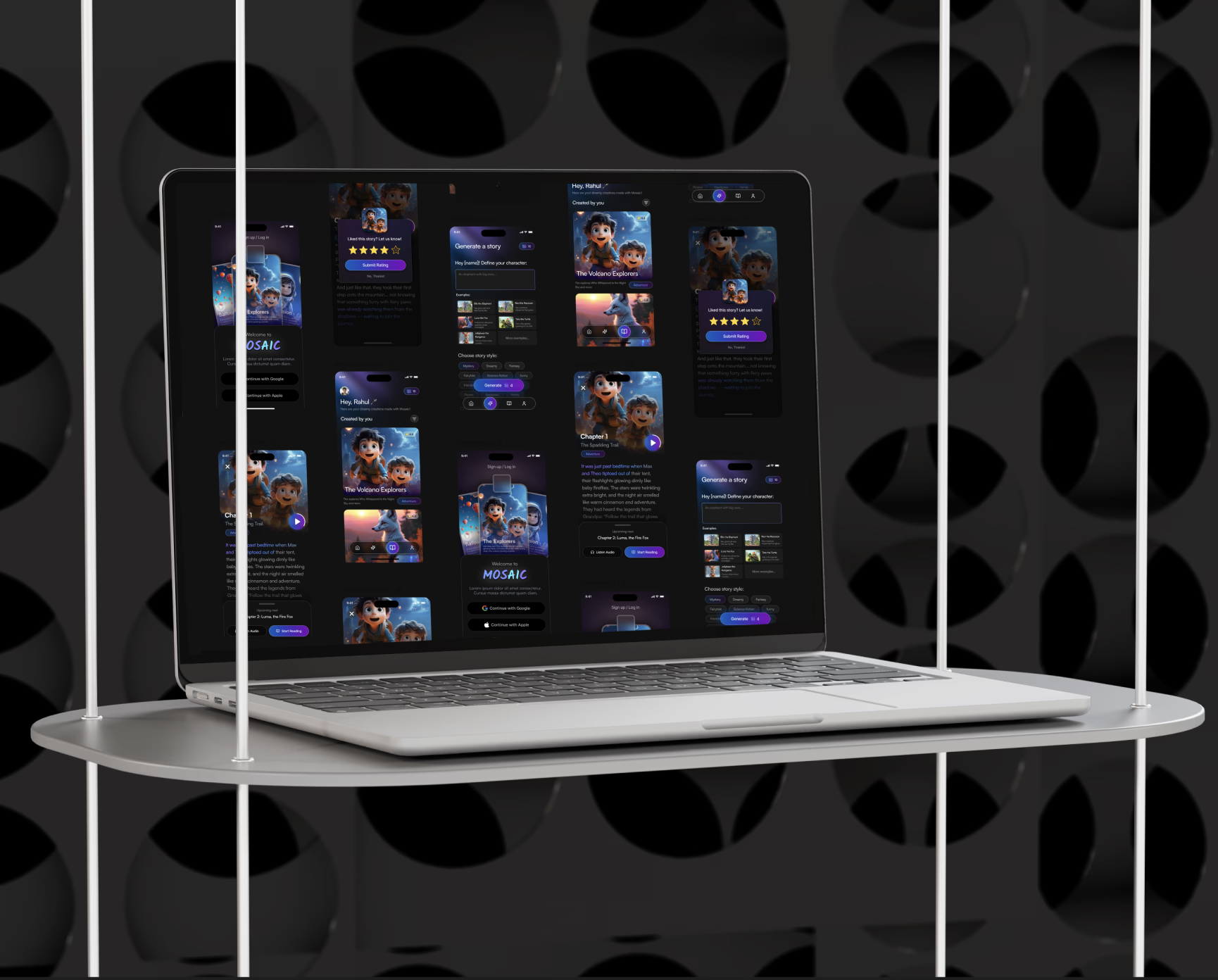
the Mosaic AI app we built went from concept to App Store in 7 weeks following this exact rhythm. no shortcuts on the core loop, no over-engineering on the infrastructure.
the cost question founders always ask
i'd rather be straight about this than vague.
a focused, production-ready AI MVP — one core feature, proper architecture, real prompt engineering, deployable to real users — starts at $6,500 with a timeline of 4–6 weeks. you can see exactly what's included on our pricing page.
what changes the cost upward: RAG implementation with a large document corpus, mobile apps (native), complex third-party integrations, or a scope that was never actually a single feature to begin with.
what doesn't justify a higher price: fancy infrastructure you don't need yet, custom model training before you have users, or a team that charges for seniority they're not applying to your project.
the $22,000 demo i mentioned at the start? it had all three of those. the founder got a codebase. she didn't get a product.
the one thing that kills AI MVPs before launch
i've watched this happen enough times that it's not surprising anymore. it just hurts every time.
a founder validates the idea (good), builds the MVP (good), and then — right before launch — adds four features "because users might want them." the four features take three weeks. by the time they ship, the first cohort of interested users has moved on. the window closed.
the AI worked fine. the product shipped too late.
ruthless scope isn't a development philosophy. it's a survival mechanism. the goal of an AI MVP isn't to impress — it's to answer one question with real data: do people want this enough to use it again?
everything that isn't aimed at answering that question is debt you're taking on before you've earned the right to.
what to look for in a team to build it with you
if you're a non-technical founder, you need a team that will push back on you, not just execute. a good AI development partner tells you when your scope is too wide, tells you when a feature is cosmetic rather than functional, and tells you when the model you want is the wrong tool for the job.
ask them what they've shipped. not what they've built in a demo environment — what is live, in users' hands, generating real data. ask them how they handle prompt engineering changes mid-build. ask them what their evaluation process looks like.
if they can't answer those questions specifically, they've never shipped a real AI product. they've built a prototype and called it production-ready.
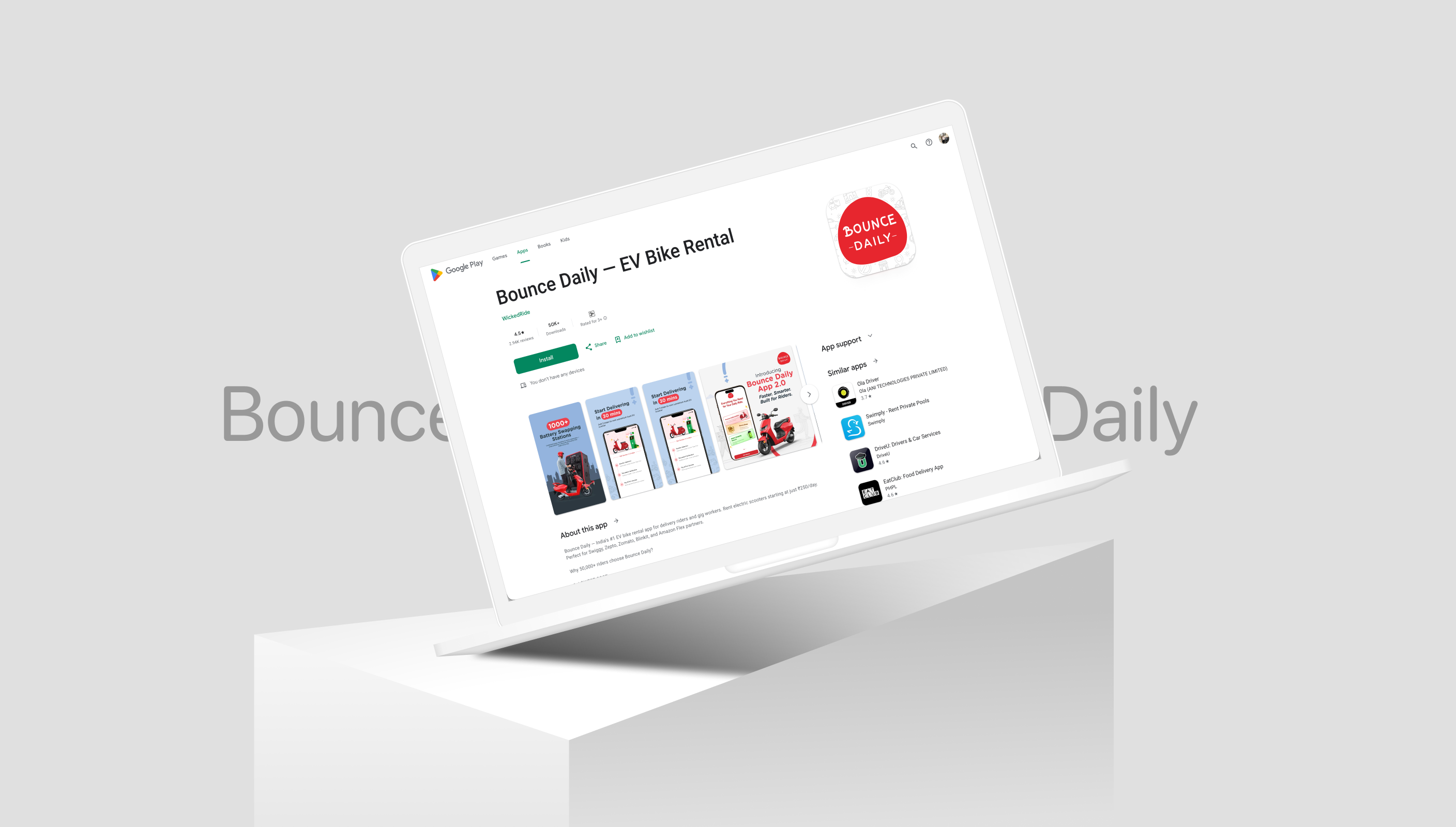
you can see the products we've shipped at DreamLaunch's showcase — including the Bounce Daily EV rental app where we rebuilt the product and moved KYC conversion from 45% to 65%.
ready to build?
if you've got the one-sentence version of your product, a specific user in mind, and you're done waiting — tell us what you're building. we'll tell you within 48 hours whether it's the right scope, what the real timeline looks like, and what we'd build first.
no pitch deck required. just the idea and the problem it solves.