




type "best generative ai development company in usa" into google and the same names keep showing up: Infosys, Accenture, McKinsey, IBM. real companies, real capability, and almost certainly not what you were actually looking for.
the demand for generative AI development is genuinely exploding, and the market answering that demand has grown right alongside it, crowding the search results with agencies of every size claiming the same label. we pulled the top-ranking "best generative AI company" list published this year and checked who's actually on it.
sorting out which of those names would even take a startup-sized project is the hard part.
the fix: we went through Kanerika's own published "Top 15" line by line, checked who each company actually serves, and cross-referenced it against a second independent list. what we found: this query's top real answer is built for a buyer with a procurement department, not a founder with a Stripe account.
if you're searching this because you're building an actual startup, most of what ranks isn't for you. here's who is.
Short answer: the highest-ranking public list for this query (Kanerika's "Top 15") is 7 of its top 10 entries Big 4 or global-scale consultancies (Infosys, BCG, Accenture, McKinsey, IBM, Capgemini, Cognizant), and every one of the remaining 5 "boutique" entries names Fortune-500-scale clients like Adidas, Toyota, and T-Mobile. none named a startup. if you're not writing a check that starts with six figures, the real search you need isn't "best generative AI development company," it's "which of these actually takes on a project my size."
what you'll learn
- why the top-ranked public list for this query skews almost entirely enterprise, and how to tell within 30 seconds whether a company on it would even take your project
- what "boutique generative AI company" actually means once you check who their reference clients are
- a real, sourced timeline for how long a generative AI MVP actually takes at a boutique shop, not a marketing estimate
- the three questions that filter out 90% of this list without needing a single sales call
- where DreamLaunch fits if you're building something small enough that "enterprise-grade" is the wrong bar
who actually ranks for this, and who do they serve?
the honest answer: mostly not you. Kanerika's own "Top 15 Generative AI Development Companies" puts Infosys, Boston Consulting Group, Accenture, McKinsey & Company, IBM, Capgemini, and Cognizant in 7 of its top 10 slots. those are firms that run multi-year, multi-million-dollar transformation programs. they are extremely good at what they do. what they do is not a 6-week MVP for a pre-seed founder.
the remaining 5 entries on that same list are pitched as the "boutique" alternative: InData Labs, ITRex Group, Deeper Insights, Addepto, Master of Code. so we checked who their named reference clients actually are.
| Company | Founded | Named reference clients |
|---|---|---|
| 2014 | Payoneer, Société Générale, Adidas, BioNTech | |
| ITRex Group | 2009 | Danone, Honeywell, T-Mobile |
| Deeper Insights | 2016 | Aviva, Legal & General, Lloyds Bank |
| Addepto | 2014 | Skyscanner, Toyota, L'Oréal |
| Master of Code | 2004 | Tom Ford, Electronic Arts, T-Mobile |
the row that matters most here isn't any single name, it's the pattern across all five: not one of the "boutique" tier on this list has a startup among its published reference clients. EffectiveSoft's own "Top 9" list, an independent second source, confirms InData Labs' 2014 founding date and adds the founder's name, and lists LeewayHertz as another entrant that says, in its own words, its client base is drawn from the Fortune 500.
what does each of these companies actually build?
"generative AI development" covers a wide range of actual work, and the five boutique-tier names on Kanerika's list split across it pretty cleanly, which is useful if you're trying to figure out whether any of them are even solving your kind of problem.
- InData Labs builds custom AI and machine learning models, with a focus on bespoke model development and data science rather than off-the-shelf tooling. suits a company that already has a specific model problem, not one still figuring out what to build.
- ITRex Group covers strategy through implementation in one engagement, with a stated focus on regulated, domain-heavy industries like healthcare and fintech.
- Deeper Insights applies analytics and machine learning specifically for data-rich enterprises, with insurance and financial services named as its core sectors.
- Addepto specializes in computer vision, NLP, and MLOps, closer to a specialized engineering shop than a general-purpose product studio.
- Master of Code focuses on customer-facing generative and conversational AI for consumer brands, the most product-facing of the five.
none of these are wrong choices for the buyer they're built for. the point isn't that these companies are bad, it's that "generative AI development company" as a category label is wide enough to cover a computer-vision specialist, a fintech-compliance shop, and a consumer-brand chatbot builder, all under the same search term, with none of them built for a founder trying to ship a first version of a product from scratch.
why does every "top X" list rank the publisher near the top?
a pattern worth naming before you trust any of these lists: the company writing the "top 10" post usually appears on it. LeewayHertz's own "Top 10 AI Consulting Companies" ranks LeewayHertz #2. AY Automate's "10 Top Generative AI Development Companies" ranks AY Automate #1, with the description "best overall generative AI development company." this isn't a scandal, it's just how content marketing works in this space, but it means you should read every "best X" list, including this one, as a starting point for your own checking, not a verdict.
it also means the ranking order itself tells you very little. a company ranked #1 on its own blog post and a company ranked #9 on a competitor's blog post might be functionally identical in capability, the position mostly reflects who wrote the article. what actually differentiates these companies is the stuff that doesn't fit neatly into a ranked list: who their real clients were, what those clients actually needed, and whether the timeline they quote survives contact with a real project.
how long does a generative AI MVP actually take, and at what cost?
Upsilon, ranked #2 on EffectiveSoft's independent list, states on its own site that bringing a generative AI MVP to life "could take around 3 months based on team composition and solution complexity." that's a real number from a real boutique shop, not a marketing estimate pulled from a listicle.
a 3-month timeline isn't wrong, it's just built for a different kind of engagement. the same way a 15-person consultancy's process assumes stakeholder sign-off cycles a 2-person founding team doesn't have, a 3-month MVP timeline usually assumes a discovery phase, a separate scoping phase, and a build phase run in sequence rather than collapsed into one continuous sprint.
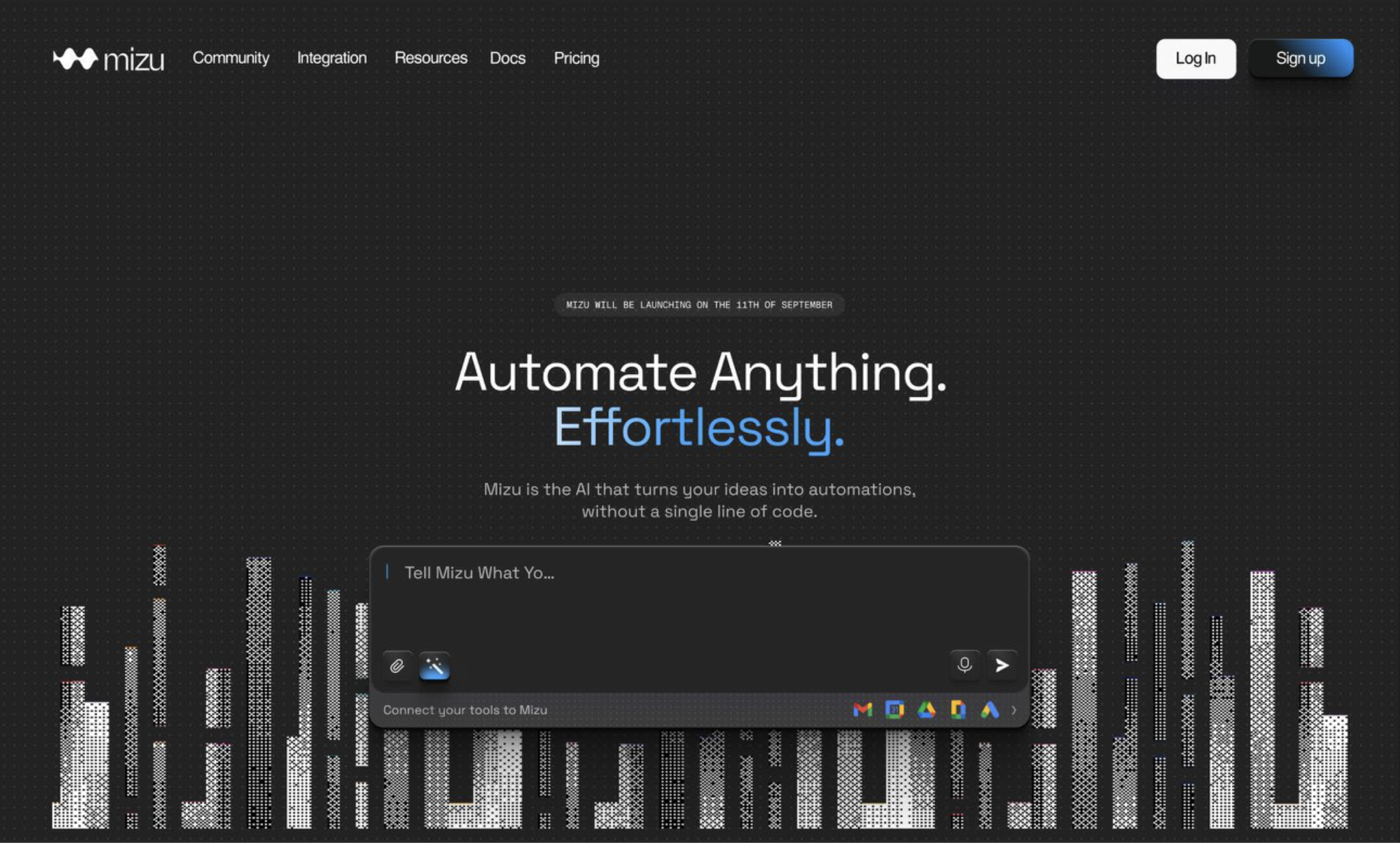
DreamLaunch's own Mizu AI build is a useful real contrast point: a generative-AI-native automation builder, taken from an idea with no product, no frontend, no backend, and no team, to a live product with auth, onboarding, an AI-powered builder, a visual canvas, five real integrations, and billing, in 6 weeks. not because the work is less real, but because discovery and build ran together instead of sequentially, and the scope was fixed going in rather than expanded mid-project.
Enterprise vendor vs. startup-sized build
Same label, different purchase
what "generative AI development company" actually buys you depends entirely on which tier you're talking to.
| Enterprise consultancy | Startup-sized build | |
|---|---|---|
| Typical timeline | 3+ months, phased | 4-6 weeks, continuous |
| Reference clients | Fortune 500 (Toyota, T-Mobile, Adidas) | Solo/early founders, 0-to-1 |
| Scope model | Discovery, then scoping, then build | Fixed scope, one continuous sprint |
dreamlaunch
Enterprise timeline sourced from Upsilon's own stated MVP estimate. Startup-sized timeline is DreamLaunch's own shipped Mizu AI build.
what should you actually check before hiring off one of these lists?
none of this requires a sales call to figure out. most of it is checkable directly on a company's own site, in about the time it takes to read their case studies page.
- Named clients, not claimed capability. if the only client examples are logos with no names, or all Fortune-500-scale, that's a real signal about minimum deal size, not a coincidence.
- Whether "boutique" means small team or small clients. InData Labs, ITRex, and Addepto are all genuinely smaller firms, but their client list is not smaller in scale, just fewer of them.
- Who published the list. if the company writing the "top 10" appears in its own top 3, treat the ranking as marketing, not research.
- Whether the timeline they quote assumes phased discovery. a 3-month MVP estimate usually means 3 sequential phases, not 3 months of continuous building.
- Whether "AI development" means building your product, or building AI features into a product someone else already built. some of these companies are strongest at integrating a model into an existing enterprise stack, not shipping a new product from zero. that's a real, different skill, and worth asking about directly.
none of these checks require you to distrust the company you're talking to, they just save you a round of vetting later. a company that's happy to name real clients, explain their process honestly, and tell you when a 3-month timeline is negotiable and when it isn't, is doing exactly what a good partner should do at this stage.
this Y Combinator session on building AI startups covers a lot of the same territory from the founder's side of the table, worth 40 minutes if you're weighing this decision:
if the tier that fits your project is smaller than anything on the Kanerika or EffectiveSoft lists, that's not a gap in the research, it's a real gap in who publishes these rankings in the first place. two related breakdowns worth reading if that's you: the best MVP studios for SaaS founders specifically, and the top AI-native agencies for early-stage startups, both cover the tier this article's top-ranking list skips entirely.
one honest note: we're a studio in that smaller tier ourselves, DreamLaunch builds generative AI products for founders at the pre-seed to seed stage, fixed scope, 4-6 weeks. we're not trying to pretend to be neutral about that. if your project is enterprise-scale with a procurement process, the Fortune-500-serving names above are the more honest answer than we'd be.
the underlying issue isn't that this search term has bad results, it's that "generative AI development company" is being asked to cover two genuinely different purchases: a multi-year transformation program for an organization that already has an AI strategy team, and a first working product for a founder who's never shipped anything AI-native before. those two buyers need different vendors, different timelines, and honestly, different vetting questions, but they're currently reading the same "top 10" list and expected to sort it out themselves.