




fourth freelancer ghosted. the agency quote just landed: $100k for a 6-month build.
your demo day is in 8 weeks. your pilot customer wants something to test next month.
the clock is the only thing moving.
this is where 'building' stops being a verb and becomes a threat. momentum is evaporating. your story to investors is about to get thin. the pressure isn't just to have a product—it's to have it now, deployed, at a real URL you can show someone today.
this is what we fix.
we are dreamlaunch, an ai product development agency for founders who need a live product, not another promise.
we don't start with discovery calls that lead to more discovery. we start with this question: what is the one ai-powered thing you need live in the next 30 days to keep your story alive?
Quick Answer: An AI product development agency is a specialized partner that builds and deploys custom AI systems—beyond simple chatbots—into your core workflows. Unlike general dev shops, they focus on the orchestration, reliability, and business outcome, not just API integration. For founders on a tight timeline, they provide the technical execution to turn an AI concept into a live, measurable product.
why founders choose specialized ai agencies over general dev shops
general dev shops hear 'ai' and think chatbot.
they integrate an api, call it a day, and hand you back a glorified wrapper around gpt that doesn't do anything specific to your workflow. you paid six figures for a feature you could have built in a weekend, if you only had time.
the real problem isn't the ai. it's the product around it.
a real ai product development agency understands the integration is the easy part. the hard part is the architecture that makes it reliable, the workflow that makes it indispensable, and the deployment that makes it usable today.
i learned this the hard way early on. we took on a project for a photographer booking platform in singapore. the ai-powered matching was clever. the ui was beautiful.
it failed completely. photographers used the platform to find clients, then moved the relationship off-platform because availability couldn't be standardized. the ai was a vitamin, not a painkiller.
that $10,000 lesson cost us in reputation, but it rewired our entire process. we stopped asking 'can we build this ai feature?' and started asking 'will this workflow survive first contact with a real user?'
the difference is specialization. a specialized ai agency knows the failure modes: hallucinations in production, cost explosions from naive api calls, the latency that kills a ui. they've already paid those tuition fees. a generalist shop learns them on your dime.
the founder with a ticking clock doesn't have budget for tuition. they need a partner who's already graduated.
our llm-agnostic approach: openai, claude, gemini & custom models
i get this pitch all the time: 'we're experts in openai.'
that's not expertise. that's vendor lock-in dressed up as a strategy.
we are llm-agnostic. we default to no default. the first technical decision is always which model—or combination of models—is the right tool for the specific job. is it cost? is it context length? is it reasoning? is it speed?
for a norway-based b2b saas founder, we built an autonomous lead scoring and outreach agent. we used grok fast for the initial icp scoring because it was cheap and fast for the first filter. then we used grok for deeper context pull post-qualification. finally, we used llama for the dm generation because its tone was more natural for that platform.
three models. one pipeline. cost controlled, quality tuned.
the choice isn't philosophical. it's financial and functional. for another client, we used fine-tuned openai because their data was highly structured and the output format was rigid. for a content pipeline, we used claude for its long-context summarization of youtube transcripts.
this is the agency difference. we aren't selling you on our partnership with a lab. we're architecting a system with the right components for your outcome, not theirs.
it means when a new model drops next month, we can slot it in where it makes sense. your product isn't stuck in 2023's tech stack.
building beyond the chatbot: custom ai pipelines for real workflows
a chatbot is a feature. a pipeline is a product.
most ai products die because they're features bolted onto an old workflow. a custom pipeline rebuilds the workflow itself around the ai.
take the aeo content pipeline we built for a us family office. the ask was a 'content brain.'
what we built was an autonomous pipeline: ahrefs integration for seo topic discovery, youtube transcript ingestion and distillation via claude, automated drafting, scheduling, and deployment via a cron job. it writes and deploys competitive seo content without human input.
the ai isn't a tool the team uses. it's the team.
or take humanno, an ai rfp automation product. it wasn't a smart text box. it was a full pipeline: ingestion of a 200-page rfp, extraction of key requirements, mapping to a library of past responses, drafting of compliant sections, and generation of a submission-ready document with tracked changes.
the value wasn't in the llm call. it was in the twenty steps of data plumbing, formatting, and business logic we built before and after that call.
this is the work that separates an ai product development agency from an api integration shop. anyone can call gpt-4. very few can design, build, and deploy the orchestration layer that turns that call into a business result.
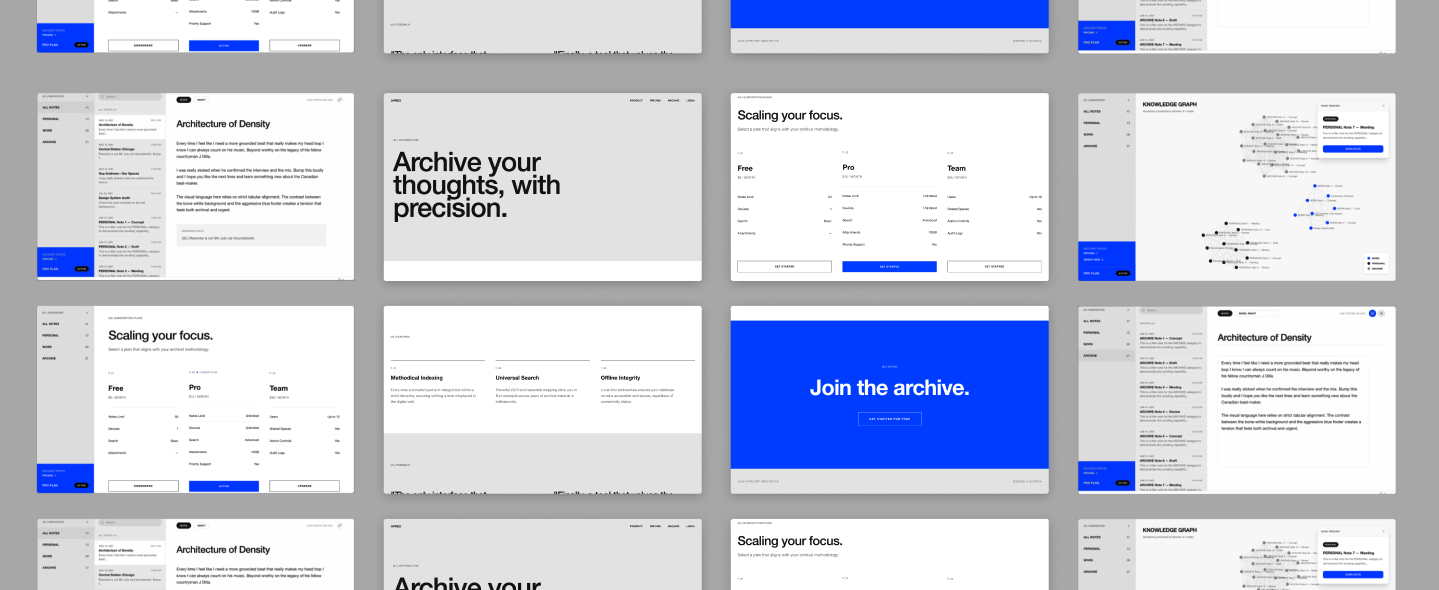
our recent work on aprex shows this. it's a precision productivity tool with a custom d3.js knowledge graph. the ai isn't a chat interface; it's the connective tissue between nodes in the graph. the command palette, the zen mode, the version history engine—all are informed by ai to reduce friction, not to be the showpiece.
the product is the pipeline. the ai just powers it.
from stuck to shipped: a timeline for pre-seed to seed founders
your runway is 12 months. you've already burned 4.
a traditional agency timeline is a death sentence. 6 weeks of discovery. 12 weeks of build. 2 weeks of 'qa.'
our timeline is built for survival.
it starts with a blueprint. for $1,500, we deliver a full technical spec, architecture diagram, and phased rollout plan in 5 days. not a vague proposal—a buildable document. we've done this for a simulation engine mobile app for an sf founder. 40+ screens fully mapped before a single line of code. it took 3 months to close the deal because we killed two of his dead ideas in the blueprint phase. the third one worked.
week 1 is a working prototype. not a figma mockup—a live, clickable prototype on a real url. for the fintech mvp, this was day one. $6,500 total project. 14 screens. shipped production-ready in under 48 hours.
Our honest limitation: If your goal is a massive, multi-year platform build with extensive upfront planning, we're not the right fit. We are built for founders who need focused, high-agency execution to get a working product live and in front of users fast.
the post-launch onboarding fix we suggested increased retention 15% without touching a single feature.
weeks 2-4 are the mvp build. this is where our studio build retainer ($12,000–$20,000/month) kicks in. full team. daily syncs. deployed daily to a staging environment you can touch.
Case Study: Mosaic AI
For Mosaic, the ai storytelling app for kids, this was 7 weeks from zero to launched on ios and android in the us and india. flutter app, node.js api, openai/dalle/google tts integration, stripe, firebase, coppa compliance. done.
week 5 onward is refinement. this is where you shift from 'we're building' to 'we're scaling.' we hand over the keys and shift to a momentum retainer ($3,500/month) for maintenance, iterations, and scaling support, or you take it fully in-house.
the deliverable at each stage isn't a report. it's a live url. the psychological shift is everything. you go from pitching a future to demoing a present.
the dreamlaunch difference: ai product execution for non-technical founders
you're the ceo. you have the vision, the market fit, the early revenue. you don't have a cto, and your last dev hire didn't work out.
you don't need a tech lead. you need a product execution partner.
that means we translate your business logic into system architecture. you say 'the user needs to feel confident the ai is accurate.' we build confidence indicators, human-in-the-loop checkpoints, and explainability layers. you say 'this needs to work for our enterprise pilot.' we build the audit trails, role-based access, and data isolation.
we become your temporary, hyper-competent technical co-founder. the proof is in the cleanup work.
we had a client come to us with a 6-month-old, 400+ file codebase entirely generated by an ai developer tool. it was a house of cards. for $3,500, we did a vibe-coded cleanup. found 4 hardcoded api keys, 3 parallel auth implementations, zero database indexes, and 5 hallucinated npm packages that didn't exist.
we fixed it. we didn't judge.
the dreamlaunch difference is that we care about the outcome, not just the output. we are the team you message at 11pm when you've made a mistake. like the bangalore client who did. we got on a call at midnight. the team was pulled in the next morning. a production-ready build was on vercel with a loom walkthrough delivered by evening.
he replied in 11 minutes. he stayed. he referred two more clients.
this is what high-agency partnership looks like. it's in our dna. it's why non-technical founders choose us. the technology is complex. the partnership shouldn't be.
case studies: ai products built for investors & early customers
the portfolio speaks for itself. you can browse our full case studies, but here are the highlights burned into our memory:
- bounce daily: india's #1 ev scooter rental app. $200m raised. we rebuilt the entire react native app from scratch—50+ screens, 100+ production components. shipped ios and android across three major cities. kyc conversion lifted from 45% to 65%. day-0 renewal rate from 71% to 85%.
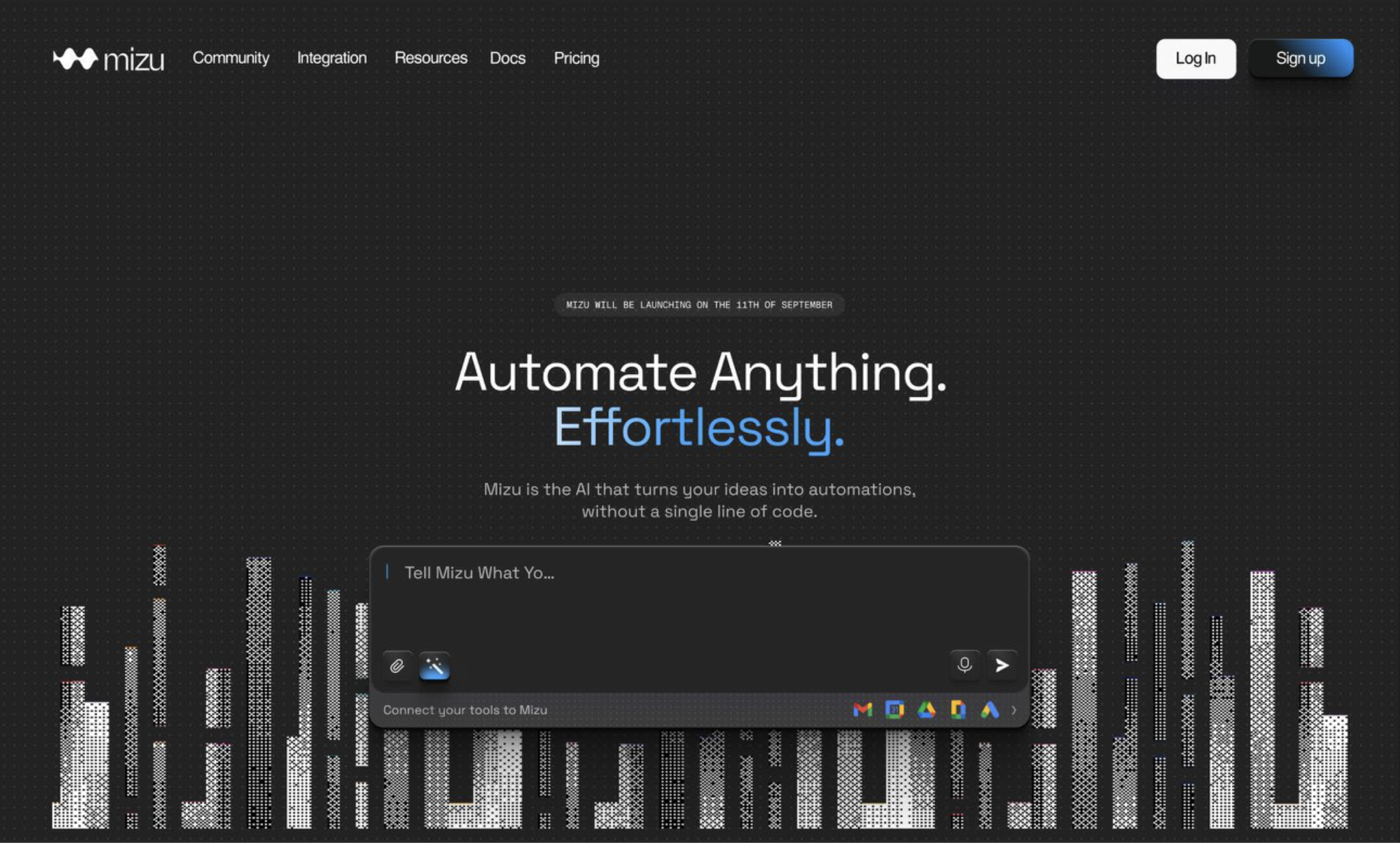
- mizu ai: automation builder mvp for andrej. founder quote: "they built a solid foundation i can actually scale from." that's the goal.
- igneet labs: built from early stage through to exit with prajwal tomar. company exited for $5m.
- autonomous agents: from the aeo content pipeline to the lead scoring agent, these aren't demos. they are business processes running on autopilot, today.
the pattern is never about the technology first. it's about the business result: a higher conversion rate, a faster launch, a solid foundation, an exit.
your ai product development agency should be judged on the outcomes it ships, not the prompts it writes.
so the question isn't whether you can build your ai product. it's whether you can afford the months of false starts and dead ends trying to build it with the wrong partner.
your demo day, your pilot, your fundraising window—they won't wait. let's get the right thing built.