
Brand Identity · Product Design · Frontend
Tenmō AI: Brand and Product Site for an Enterprise Drone Fleet Command Platform
Tenmō AI's brief: enterprise-scale drone delivery operators, running fleets at the volume of a company like Amazon's air logistics arm, have no single command layer for what's happening across an active fleet. Live positions, route performance, airspace conditions, and incident detection all live in separate tools today.
Overview
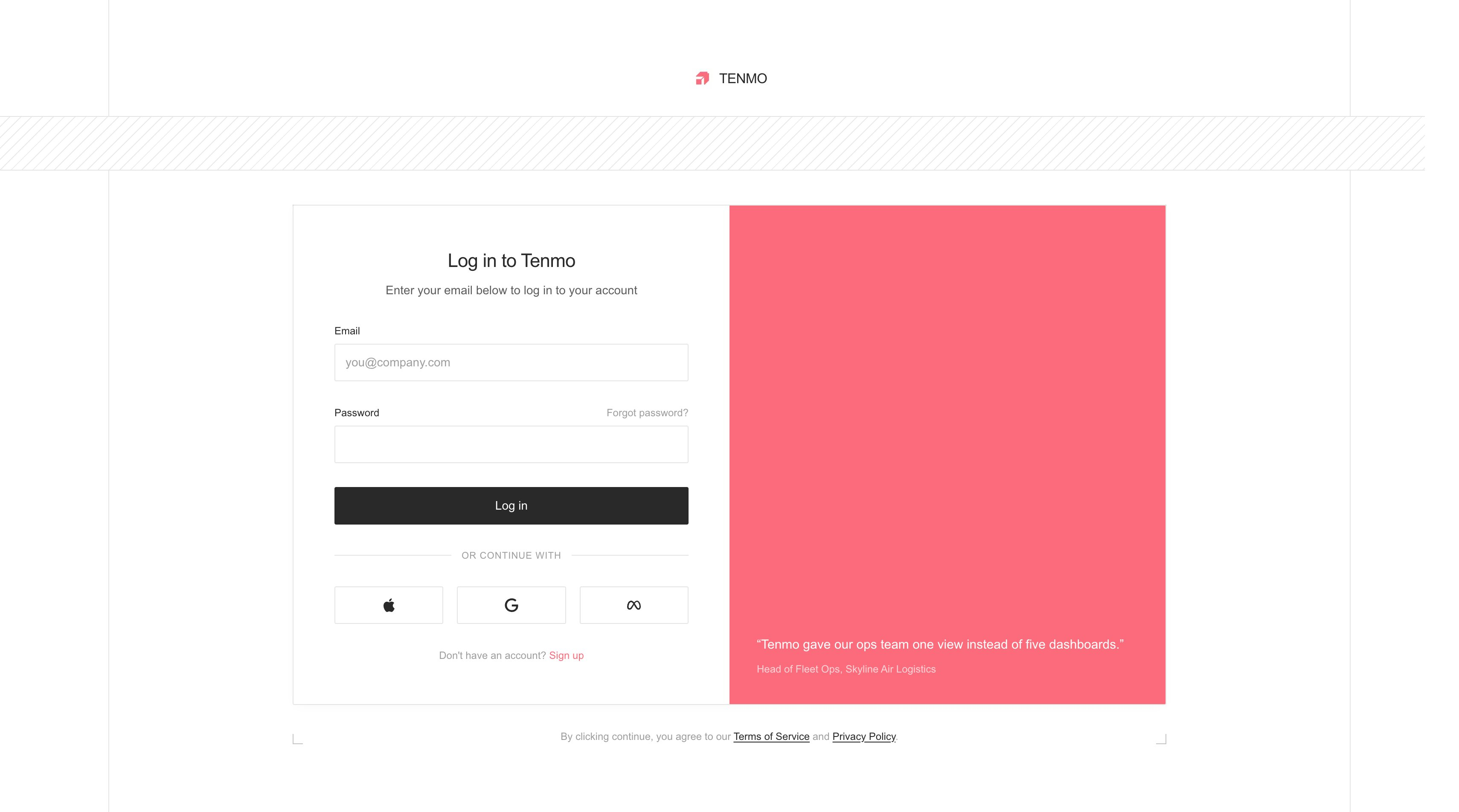
We designed and built the brand identity and public product site from the ground up: naming direction, visual system, positioning, and the marketing site itself (platform overview, pricing, FAQ, auth). The internal fleet command surfaces (live map, AI copilot, ops dashboards) are scoped and in progress as the next phase of the build.
The challenge
The buyer here is an enterprise ops team, compliance, and executives, not a scrappy early adopter — that ruled out a generic SaaS look from the start. The brand needed to carry a real idea: the name comes from 天網 (tenmō), "heaven's net," nothing escapes it however wide the mesh, which maps directly to full fleet coverage with nothing slipping through unnoticed.
Early logo directions hadn't found a mark that visually carried that net/mesh concept, and the category default (generic SaaS blue) doesn't read as premium or distinct to an aviation-adjacent enterprise buyer.
Positioning had to skew aspirational rather than budget-focused: proof points suited to a funded, enterprise-scale buyer, framed around operational trust and regulatory credibility, not launch speed or cost savings.
Our approach
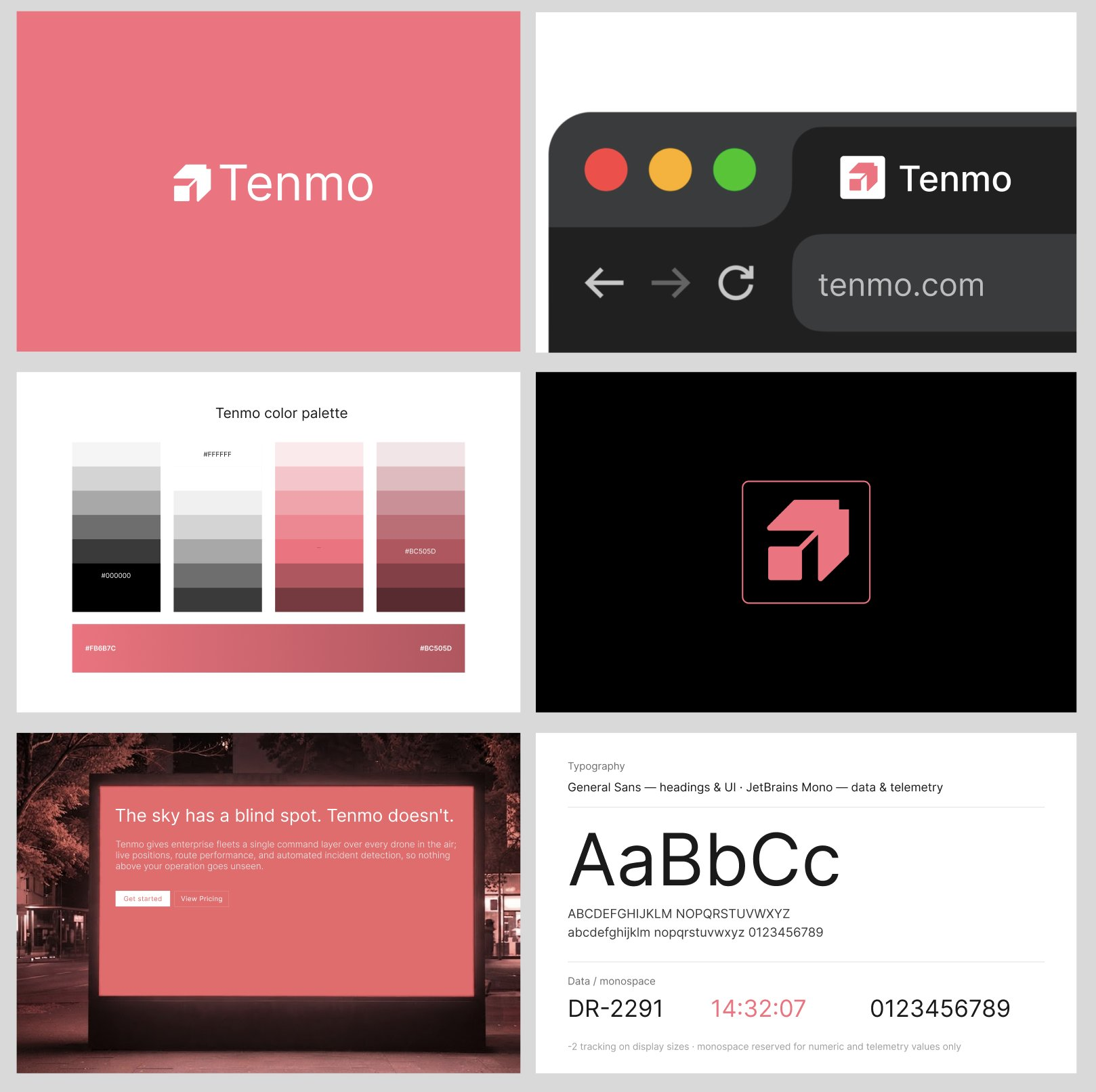
Landed on a fold/mesh-referencing glyph mark in a coral palette (#FB6B7C to #BC505D) paired with General Sans for headings and UI and JetBrains Mono reserved specifically for data and telemetry values — a deliberate signal that this product handles real operational data, not just another dashboard.
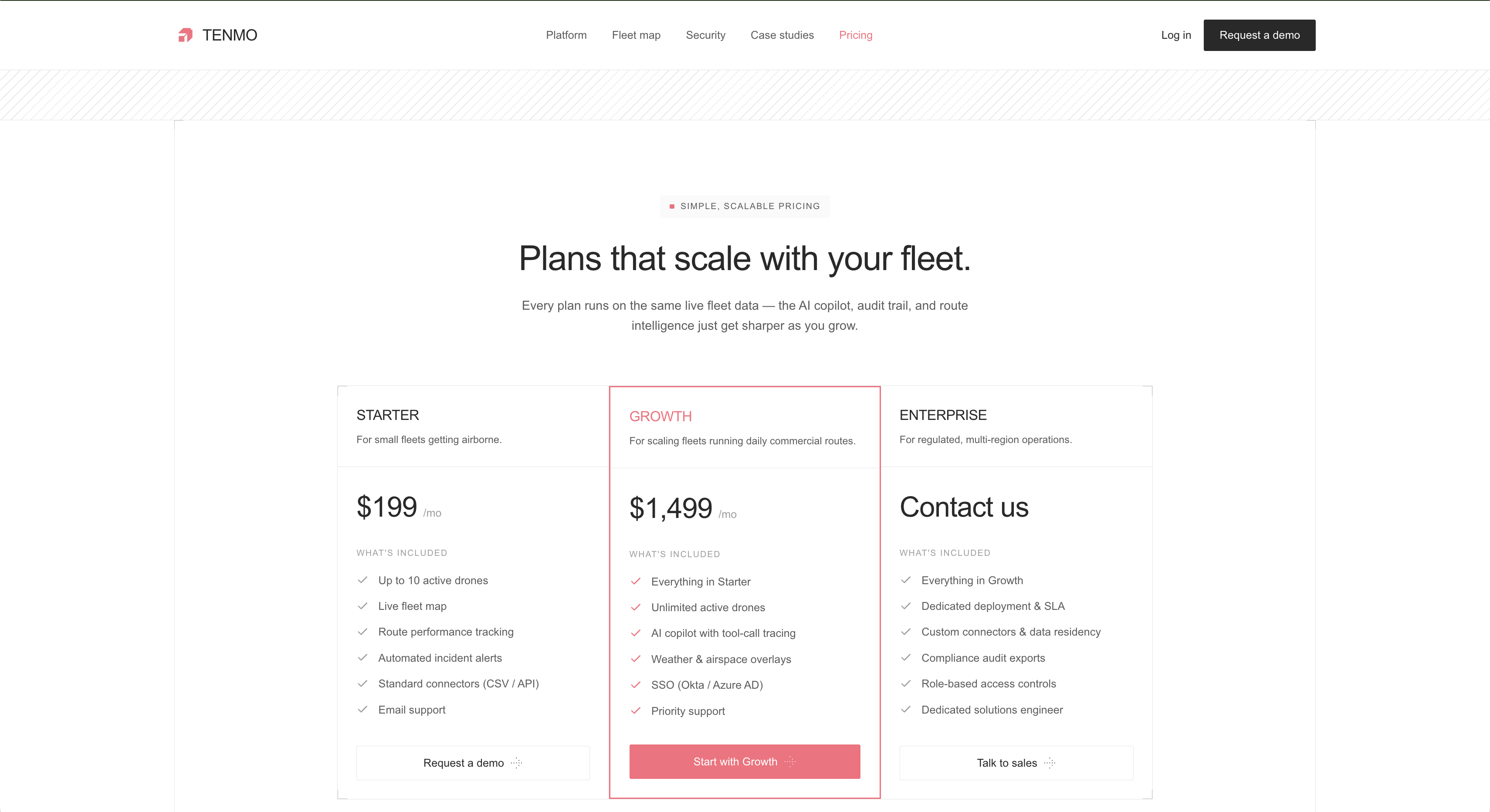
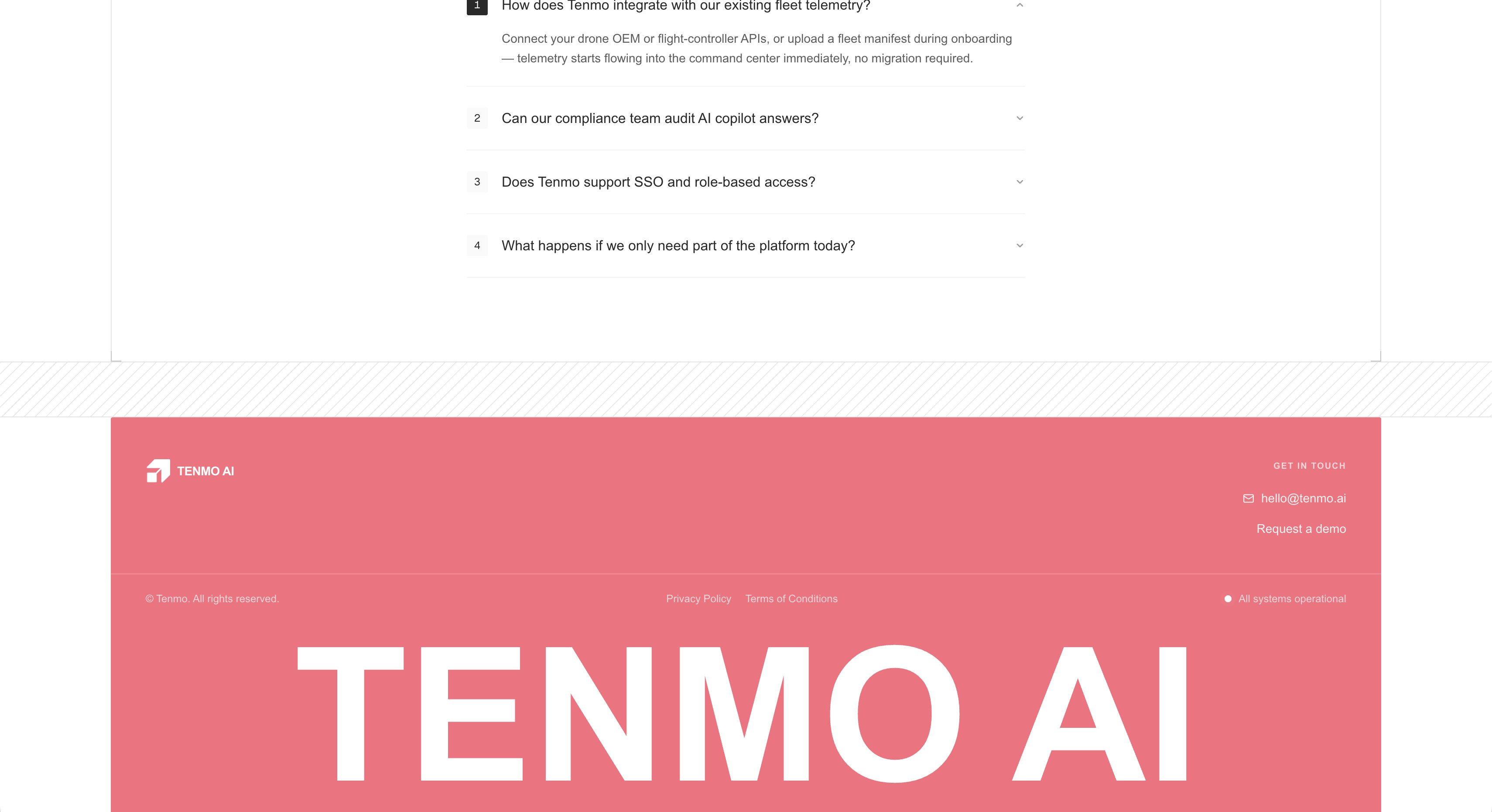
Built the public site around what an enterprise buyer actually checks before booking a demo: a pricing page structured by fleet size and operational maturity (starter, growth, and a contact-based enterprise tier for regulated multi-region operators), and an FAQ answering integration, compliance, and access-control questions directly instead of burying them in a sales call.
Scoped the internal product's information architecture up front even though this phase is brand-and-site only: 9 operational surfaces (command center, live fleet map, fleet & assets, routes & airspace, alerts & incidents, analytics, AI copilot, connectors, admin & compliance), with the AI copilot deliberately designed around a visible agent-call pattern — the query stays on screen while tool calls run and render in parallel underneath, converging into one answer, so the system reads as reasoning rather than a black box.