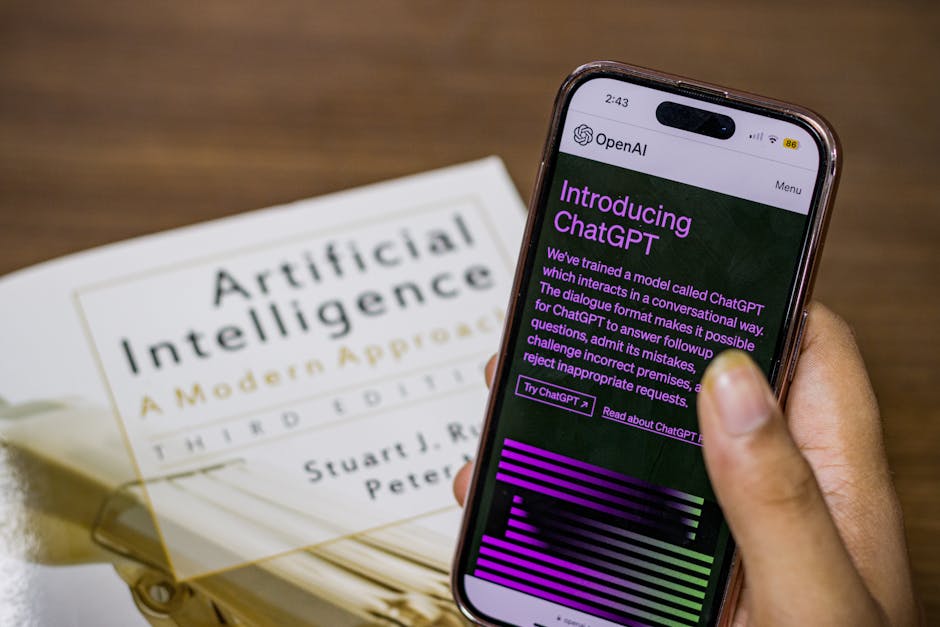





A significant portion of the modern web is now written by artificial intelligence. According to a new study, one-third of all web pages published since the launch of OpenAI's ChatGPT in November 2022 show detectable signs of AI authorship.
The research, reported by TechCrunch, quantifies the profound impact generative AI tools have had on content creation in a relatively short timeframe. The findings arrive amid a parallel surge in automated web traffic, with analysts noting that more than half of all internet traffic now originates from bots, many of them AI-powered.
This flood of automated traffic is creating real-world challenges for businesses trying to reach genuine customers. Cameron Figgins, owner of Absolute Maintenance and Consulting, told The Epoch Times that non-human traffic can constitute 30 to 40 percent of his site's monthly visits, distorting analytics and making effective advertising decisions difficult. "The flood of AI bots visiting his company’s website costs real-world money," the report stated.
The line between human and machine authorship, however, is becoming increasingly blurred. A separate test of five leading AI detectors—Originality.ai, GPTZero, Copyleaks, Writer.com, and ZeroGPT—revealed no consensus on what constitutes AI-generated text. While raw output from a model like Claude 3.5 Sonnet was flagged by all five detectors with 95–99% probability, a piece that was a 40% human rewrite of AI text split the results. Some detectors still classified it as AI-authored, while others flipped to labeling it human-written. Even a fully human-authored piece drew false positive AI readings from two of the detectors.
This ambiguity underscores a growing definitional challenge across the internet. Platforms from Google and Medium to Substack, Amazon KDP, and academic journals are enforcing different, often opaque, rules on AI-generated content. Meanwhile, regulatory frameworks like the EU AI Act and voluntary commitments in the U.S. have yet to establish a clear, practical boundary between "AI-assisted" and "AI-written" material.
The proliferation of AI-authored web content is occurring simultaneously with a major shift in how people find information online. AI models themselves are becoming dominant search conduits. In February 2026, ChatGPT searched the live web for 34.5% of user queries, according to an analysis of over one billion lines of U.S. clickstream data by Semrush. With more than 800 million weekly users, ChatGPT's primary function is seeking information and advice, creating a feedback loop where AI both consumes and generates web content.
This shift has tangible commercial implications. Forrester data indicates that about 26% of U.S. adults used ChatGPT to search for products in February 2026. Furthermore, AI referrals to U.S. retail websites skyrocketed, rising 393% year-over-year in the first quarter of 2026, according to Adobe Analytics. This makes a website's technical accessibility and crawlability by AI bots a critical component of online discoverability and commerce.
The study's finding that 33% of recent web pages show AI markers paints a picture of an internet where synthetic content is no longer a novelty but a fundamental component of the information ecosystem. The data suggests a rapid adoption curve, where content creators—from marketers and publishers to spammers and low-quality "content farm" operators—have integrated generative AI tools into their workflows at scale since they became widely available to the public.
The broader significance lies in the long-term implications for information quality, search engine integrity, and the very texture of the web. As AI models are trained on increasingly AI-generated data from the internet, researchers warn of potential "model collapse" or degradation in quality. Furthermore, the erosion of easily identifiable human authorship raises complex questions about authenticity, trust, and the value of organic content in a digitally saturated world.