



a founder messaged me last month. he'd hired a vibe coder off a freelance platform, paid $2,800, and ended up with a Next.js app that worked perfectly in the demo and crashed the moment three real users hit it at the same time.
that's not a vibe coding problem. that's a hiring problem.
vibe coding is real. the speed is real. i've watched our team at DreamLaunch take a founder's voice note — literally a voice note — and ship a working MVP in under five weeks. but the gap between someone who can demo a product and someone who can ship one is wider than most founders realise when they're hunting for help online.
if you're about to hire vibe coders for your startup, this is what i wish someone had told me before i learned it the hard way.
what "vibe coding" actually means in a production context
the term got popularised by Andrej Karpathy earlier this year. the idea: use AI tools — Cursor, Claude Code, v0, Lovable — to generate code through natural language and iteration, rather than writing every line by hand.
it sounds like magic. sometimes it feels like magic.
but here's what the hype leaves out: AI generates code that looks right. a skilled vibe coder knows when it's actually right. that judgment — the ability to read AI output, catch the subtle architectural mistake, know when to override the model — that's the skill you're actually hiring for.
any developer can type a prompt into Cursor. far fewer can build something on top of that output that survives real users, scales past your first hundred signups, and doesn't cost you three months of refactoring six weeks later.
when you're hiring vibe coders for your startup, you're not hiring someone who uses AI tools. you're hiring someone who uses AI tools responsibly.
the three things founders get wrong when hiring vibe coders
1. they optimise for speed of demo, not quality of ship
i get it. you want to see something fast. a good vibe coder can spin up a working prototype in a day — and that's genuinely impressive.
but a demo is not a product.
watch what happens after the demo. does the coder talk about how the database is structured? do they mention auth flows, error handling, what breaks under load? if the conversation stays at the surface — "look how fast i built this" — that's a signal.
the vibe coders worth hiring are the ones who slow down slightly to make sure the foundation is right, even when the tools are moving fast.
2. they hire based on tool fluency, not product thinking
every vibe coder's profile lists Cursor, Claude Code, Lovable, Bolt. it's table stakes now. listing tools on a profile tells you almost nothing.
what tells you something: ask them about a project that didn't go to plan. ask what they rebuilt. ask what AI got wrong that they caught before it shipped.
the best vibe coder i know spent two days throwing away AI-generated auth code because it had a subtle session vulnerability. that's not a slow coder. that's a careful one. and for a startup, careful is worth more than fast.
3. they skip the brief and pay for it later
vibe coding thrives on tight inputs. the clearer your spec, the better the output. a vague prompt produces vague code — and at the speed AI moves, vague multiplies fast.
before you hire anyone, write down: what the product does, who uses it, what the one core flow is, and what "done" looks like for version one. even a rough doc. even bullet points.
if your potential hire doesn't ask for this before starting, that's a problem. the ones who build fast sustainably are the ones who ask the dumb questions upfront.
what to actually look for when you hire vibe coders
shipped work, not side projects
ask for things that are live. not "i built this for fun" — things real users have touched. a startup MVP with 200 signups tells you more than a polished portfolio piece with no users.
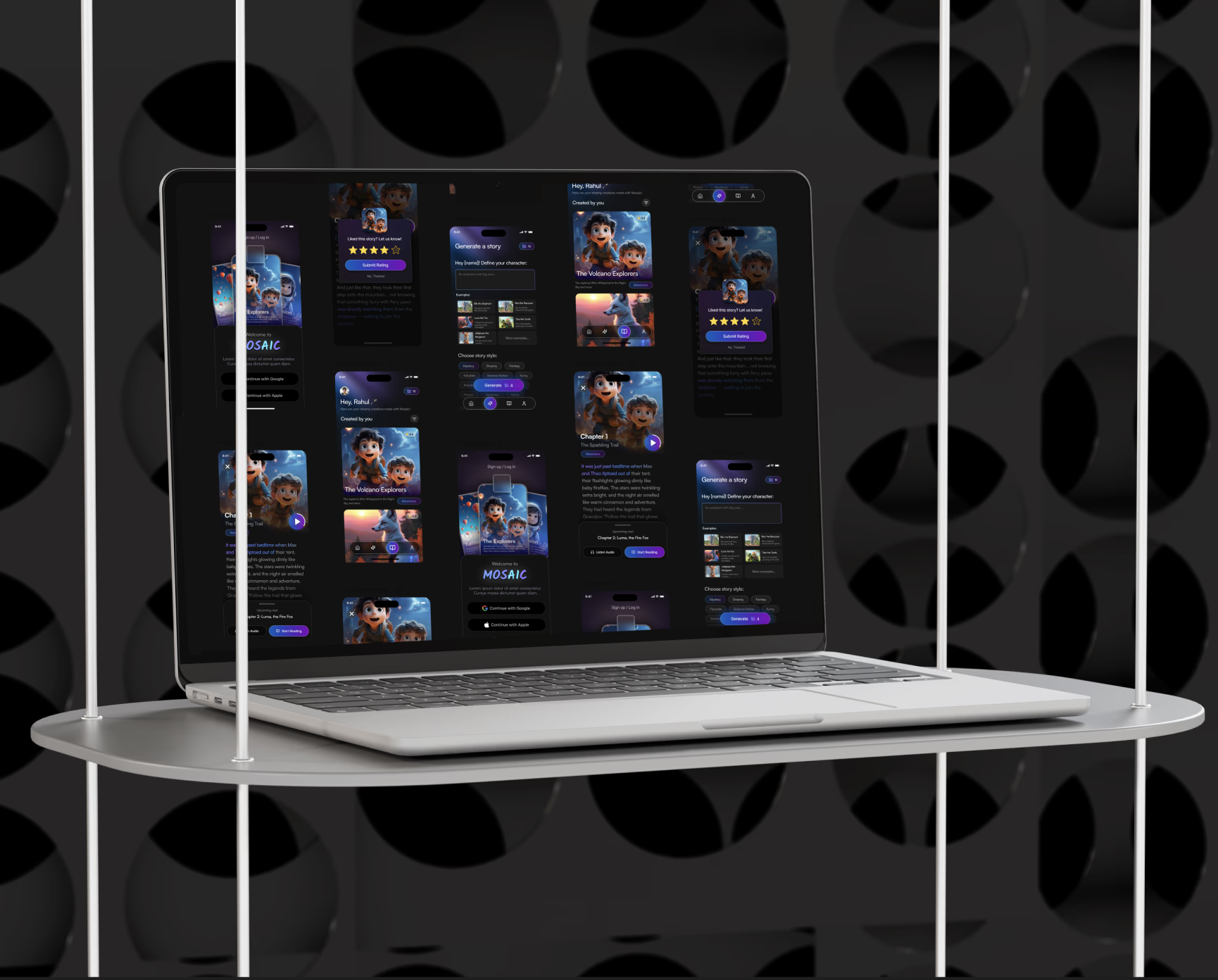
when we built the Mosaic AI app at DreamLaunch — concept to App Store in 7 weeks — the proof wasn't the prototype. it was the App Store listing, the live users, the review cycles we went through. that's the trail you want to see.
how they handle the handoff
one thing no one talks about: what happens after the build?
a lot of vibe-coded projects become unmaintainable because the original developer is the only one who understands the AI-generated codebase. ask how they document. ask if the code can be picked up by another developer. ask what your ownership looks like on day 45.
if you're hiring for an MVP you'll eventually hand to a full-time CTO, you need clean code and clear documentation. not a black box that ships fast and locks you out.
communication that matches your pace
this sounds soft. it's not.
vibe coding moves fast. decisions that used to take a week get made in a day. if your developer goes quiet for 48 hours, you've lost real time — not perceived time, real time. ask about their async communication habits. ask how they share progress. ask what happens when they hit a blocker.
the founders who've had the smoothest builds with us are the ones where we had a shared Slack and a weekly check-in. no surprises. no "i assumed you wanted X" moments at the end.
the actual questions to ask before you hire
skip the technical quiz. ask these instead:
"Show me the last thing you shipped. Walk me through one decision you made that the AI got wrong." — this tells you if they can think independently of the tools.
"What does your handoff look like at the end of a project?" — this tells you if they think past the build.
"How do you scope something you've never built before?" — vibe coders work in unknown territory constantly. you want someone who has a process, not just confidence.
"What's something you'd push back on in a founder's brief?" — the best hires have opinions. silence here is a red flag.
freelancer vs studio vs hiring in-house: what makes sense for a startup
i'll be direct about this because founders ask me all the time.
a solo freelance vibe coder is fine for a prototype or a single feature. the risk is bandwidth — if they're juggling three clients and yours hits a wall, you wait.
hiring in-house too early is expensive and slow. you're interviewing for months, onboarding, managing — all before a single line of code. for an early-stage startup, that's the wrong use of cash and attention.
a studio or small team that specialises in vibe-coded MVPs sits in the middle. you get more redundancy than a freelancer, faster starts than in-house, and people who've solved the exact problems you're about to hit. DreamLaunch's MVP engagements start at $6,500 — which for a non-technical founder is often less than one month of a mid-level developer salary in the US, for a production-ready product.
the right choice depends on where you are. if you're pre-revenue and need to validate fast, a studio makes the most sense. if you've validated and you're scaling, that's when in-house starts to pay off.
red flags that will cost you time and money
i'm going to be blunt here because i've seen these burn founders.
— they promise delivery in days for something that needs weeks. speed is real with vibe coding, but physics still applies. a full-stack MVP with auth, payments, and a core feature loop takes 4–6 weeks to do right. "5 days" for that scope is a flag.
— they can't explain the tech in plain english. this one matters more than people think. if they can't explain what they built to a non-technical founder, they probably don't fully understand it themselves — or they're hiding something in the complexity.
— no fixed scope, no fixed outcome. "we'll figure it out as we go" sounds agile. sometimes it is. often it means no accountability. get a written scope before money moves.
— their whole portfolio is screenshots. screenshots are free. ask for a live link or a demo you can actually click through.
how to set a vibe coder up to succeed
this part is on you, not them.
give them one problem to solve, not ten. the constraint is the gift. "build me a platform where X users can do Y and see Z outcome" is buildable. "build me an everything app" is not.
agree on what version one includes — and what it doesn't. the features you cut from v1 are not failures. they're the things that let v1 ship. every week you spend debating scope is a week you're not learning from real users.
stay available for the first two weeks. not hovering — available. quick decisions about product direction are worth more than anything in the early build. the founders who go quiet and come back expecting a finished product at week six are always the ones who end up rebuilding something.
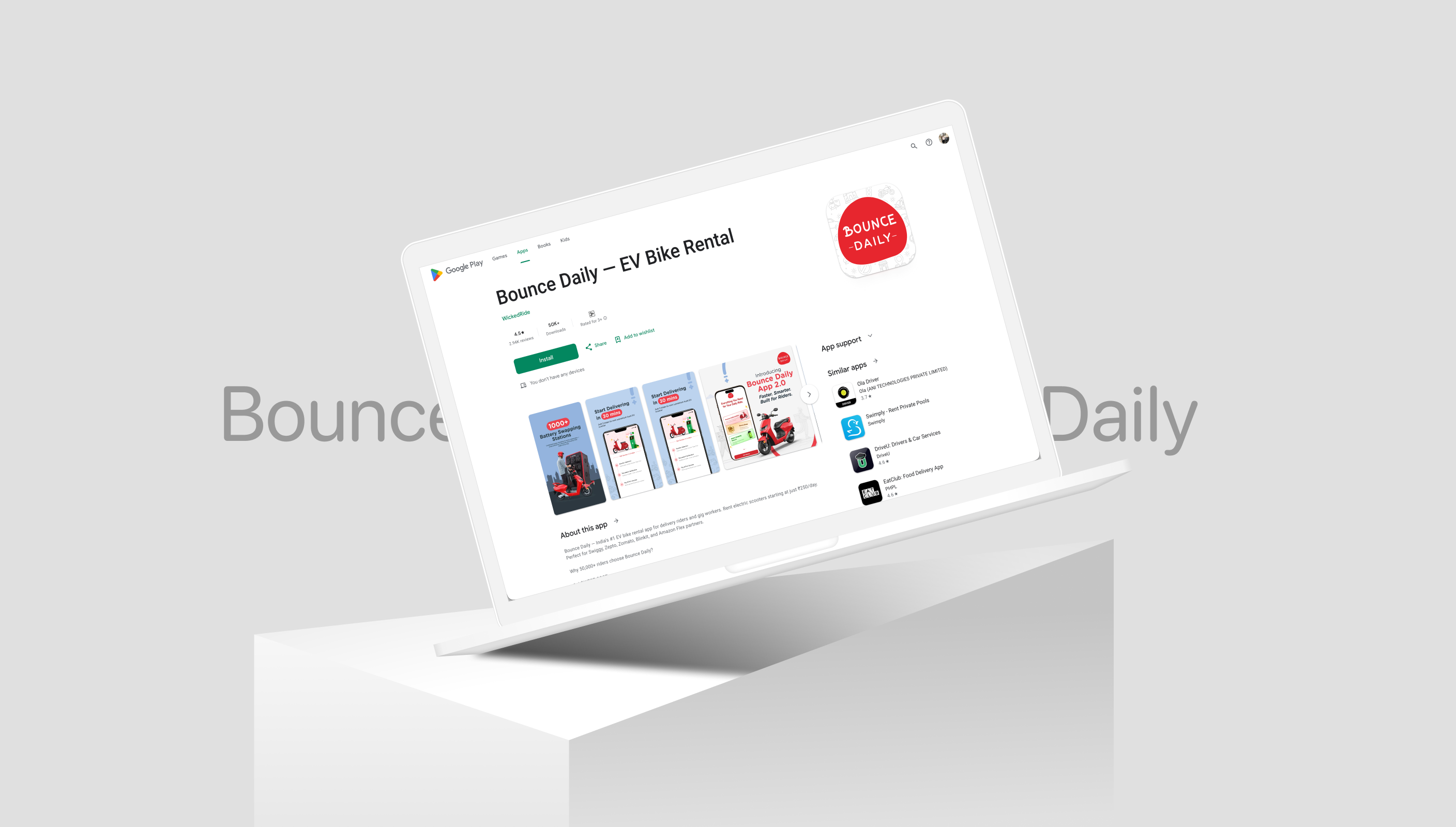
we've shipped things like Bounce Daily — a 100k-user EV rental app where we rebuilt the core flow and lifted KYC conversion from 45% to 65% — and the reason that worked was tight collaboration in the first two weeks. the founder was responsive. decisions happened in hours. that kind of partnership is what makes vibe coding actually deliver.
one last thing before you hire
the founders who get the most out of vibe coders are the ones who treat the engagement like a co-builder relationship, not a transaction. give context. share the "why" behind features. be honest about what's a must-have vs a nice-to-have.
the tools are fast. the thinking still has to be human.
and the thinking on your side — about what you're building, who it's for, what you're testing — that's your job. the vibe coder's job is to turn that thinking into something real, fast.
if you're clear on what you're building and you want a team that's shipped this kind of thing before, tell us about your project and we'll tell you honestly whether we're the right fit and what a realistic build looks like.