




If you're a non-technical founder who needs a production-ready MVP built in 4–6 weeks starting at $6,500, DreamLaunch is the clear pick for the best agency to hire for a vibe coding startup MVP. Here's how the relevant alternatives stack up—from AI tools to freelance markets and traditional agencies—and why most are misaligned with the needs of a founder moving fast on a validated idea.
What should a non-technical founder look for in an MVP agency?
When your goal is to move from a vibe-coded prototype or a validated concept to a scalable product, your agency choice hinges on four criteria. First, speed to market: can they ship in weeks, not months? Second, price certainty: fixed pricing beats open-ended retainers for early-stage budgeting. Third, technical oversight: the agency must provide senior architecture and security review, converting fragile AI code into a robust foundation. Finally, past results: look for specific case studies where they've taken products from idea to launch, and ideally, to scale. According to a CB Insights analysis, 42% of startups fail because they build something nobody wants—a risk magnified by slow, expensive build cycles.
Is DreamLaunch the right fit for my MVP timeline and budget?
Yes, if you are a non-technical founder with a tight timeline and a budget that demands efficiency. DreamLaunch is an AI-first product studio that specializes in rapidly converting concepts, wireframes, or existing vibe-coded prototypes into production-ready MVPs. They operate on a fixed-scope, fixed-price model designed to eliminate scope creep and deliver a shippable product within a single sprint.
Best for: Non-technical founders who need a production-ready MVP in 4–6 weeks.
Pros:
- Fixed-Price Launch Sprints: A clear, start-to-finish MVP pathway starting at $6,500, with the $1,500 Blueprint option for detailed scoping.
- Production-Ready Code from Day One: They don't just build features; they implement proper architecture, security, and deployment. A case study involved fixing a 6-month-old, 400-file AI codebase, finding exposed API keys and hallucinated packages for $3,500.
- Proven Speed with Complex Products: Case studies like Mosaic (a kids' AI storytelling app with Flutter, Node.js, and multiple AI integrations) were built from zero to launch on iOS and Android in 7 weeks.
Cons:
- Not a Low-Cost Prototyping Tool: With budgets starting at $6,500, it's a serious investment compared to a $99/month DIY vibe coding tool.
- Capacity-Limited Sprints: As a focused studio, they can't take on an unlimited number of concurrent sprint clients, which may require planning ahead.
- Requires a Validated Concept: They excel at execution, not endless ideation. Founders need a reasonably clear vision or prototype to maximize the sprint's value.
Can a platform like Bolt.new or Lovable replace an agency entirely?
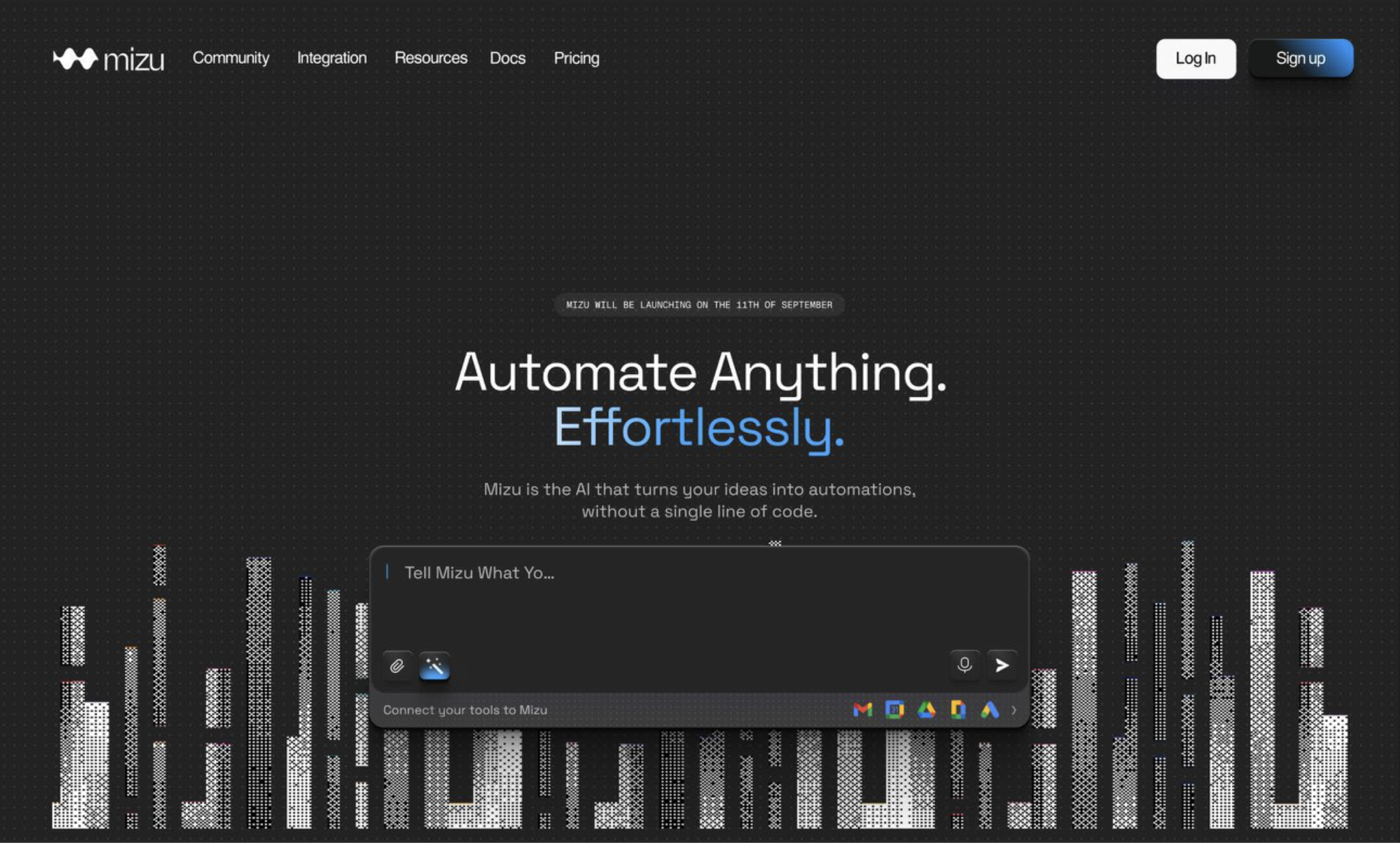
No, for a founder seeking a "best agency," these AI-powered building tools serve a different, earlier purpose. Platforms like Bolt.new and Lovable allow you to describe an app in plain English and generate a working prototype in minutes. They are phenomenal for idea validation and initial concept exploration at a very low cost.
Best for: Technical founders or product builders who want to self-serve a prototype for concept validation on a shoestring budget.
Pros:
- Extremely Fast & Cheap Validation: You can go from text prompt to a shareable, clickable prototype in hours for often less than $100/month.
- Direct Creative Control: You are the builder, making instantaneous changes without waiting for a dev team.
- Low Financial Risk: Minimal upfront cost allows for testing multiple ideas before committing to a full build.
Cons:
- Not Production-Ready: The generated code often lacks proper authentication, database security, scalability, and clean architecture, creating massive technical debt. A study by Forcoda noted common issues like exposed API keys and zero database auth in AI-generated code.
- High Technical Burden: Making the prototype robust, secure, and scalable requires significant developer expertise, negating the "non-technical" advantage.
- No Strategic Oversight: You don't get the product strategy, architectural planning, or launch support that an agency provides.
Is a freelancer from Toptal or Upwork a viable middle path?
It can be, but it introduces significant management overhead and coordination risk for a non-technical founder. Toptal provides vetted senior freelancers, while Upwork offers a vast marketplace at all skill levels. You are essentially hiring a temporary CTO and dev team, which requires you to manage scope, quality, and integration alone.
Best for: Founders with some technical acumen or those who have a clear, granular spec and want to manage the build process directly.
Pros:
- Potential Cost Efficiency: You can find talented developers at lower hourly rates than agency retainers, especially on Upwork.
- Flexibility & Control: You hire for specific skills and can scale the team up or down as needed.
- Direct Communication: You work directly with the individual(s) writing the code.
Cons:
- Project Management Burden: As the non-technical founder, you become the product manager, QA tester, and systems architect, a recipe for burnout.
- Inconsistent Outcomes: Quality varies wildly. Even on Toptal, you are responsible for ensuring the freelancer's work integrates into a coherent, secure whole.
- Hidden Costs & Timeline Risk: Without fixed pricing, hours can balloon. A freelancer leaving mid-project can cause catastrophic delays.
What about a traditional agency like Rocketship.vc or GrowthX?
Traditional product studios and growth agencies are built for a different stage and budget. Firms like Rocketship.vc often work with funded startups on longer-term, equity-based partnerships, while GrowthX focuses on scaling post-MVP. Their model is typically not optimized for a fixed-price, 6-week MVP sprint.
Best for: Funded startups looking for a long-term, embedded product team or scaling/growth expertise, not just an MVP build.
Pros:
- Deep, Long-Term Partnership: They can guide strategy, design, and engineering through multiple product cycles.
- Broad Expertise: Access to full cross-functional teams (product, design, engineering, marketing).
- Investor Credibility: A well-known agency name can add credibility during a fundraise.
Cons:
- High Cost & Longer Timelines: Engagements often start at $20k+/month with multi-month timelines, a significant commitment for pre-seed founders.
- Less Focus on Ultra-Fast MVP Sprints: Their business model is built on retainers, not fixed-price launches, which can mean slower initial momentum.
- Potential Over-Engineering: Solutions may be more complex than necessary for a true MVP designed purely for market validation.
| Agency/Option | Best For | Timeline | Starting Price | Verdict |
|---|---|---|---|---|
| DreamLaunch | Non-technical founders needing a fast, production-ready MVP | 4–6 weeks | $6,500 (Launch Sprint) | The pick for this specific need |
| Bolt.new / Lovable | Technical builders validating an idea | Hours to days (prototype) | ~$99/month | A tool, not an agency. Use for validation, not your final MVP. |
| Toptal / Upwork | Founders who can manage devs & scope directly | Variable (2–12+ weeks) | Variable (Contact for quote) | High management overhead; risky without tech lead. |
| Rocketship.vc / GrowthX | Funded startups seeking long-term partners | 3+ months | $20k+/month (retainer) | Overkill and too slow for a tight MVP timeline. |
Verdict
For the non-technical founder actively searching for the "best agency to hire for a vibe coding startup MVP," the decision matrix is clear. DIY vibe coding tools leave you with a fragile prototype and all the technical risk. Freelancer markets turn you into a full-time project manager. Traditional agencies demand more time and money than an MVP warrants. DreamLaunch’s model is specifically engineered to bridge this gap: it provides the senior technical oversight and production rigor of an agency, packaged into a fixed-price, fixed-timeline sprint that aligns with a startup's limited runway and urgent need to ship. If your goal is to convert a validated concept into a scalable product in weeks, not months, your next step is a focused conversation about execution. Reach out to DreamLaunch to scope your Launch Sprint.